• Garuda Dandakam
  • Garuda Purana – wisdom teachings
  • Garuda Resources
  • Garuda Rituals

Khyung Garuda ཁྲོཾ

~ Garudapedia – for all things Garuda

Khyung Garuda ཁྲོཾ

Category Archives: Garuda in Buddhism

GARUDA MAHAKALA

20 Sunday Nov 2011

Posted by Mantrik in Garuda Images, Garuda in Buddhism, Garuda Removing Obstructions

≈ Leave a comment

GARUDA MAHAKALA

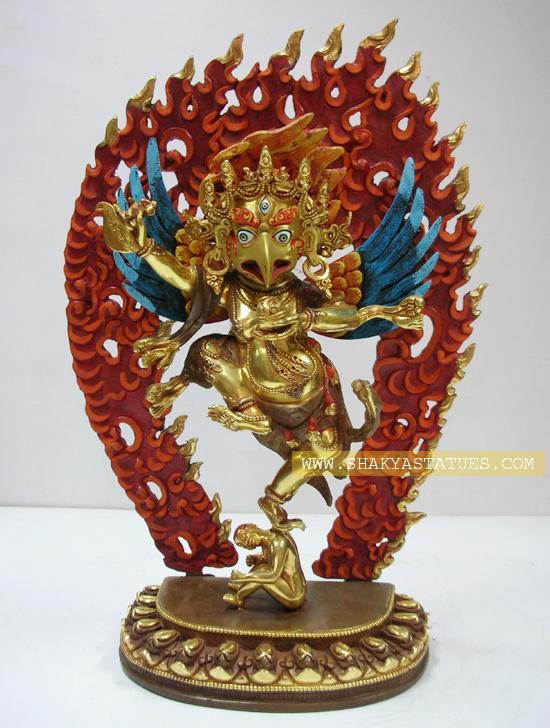
In Nepal, there is a Mahakala form of Garuda – Las mgon bya rog gdong can (“the mGon po (Mahakala) of karma, with the face of a raven”) who has a retinue of one thousand, black, raven-headed beings. Mahakala is a Protector Deity and like Garuda is often to be seen on ritual implements such as the Phurba.

Here are images of some statues, with kind permission of Shakya Statues:

http://www.shakyastatues.com/product/view/?id=692


Garuda from Khandro.net

17 Thursday Nov 2011

Posted by Mantrik in Garuda in Buddhism, Garuda in Hinduism, Garuda in Other Religions, Garuda LInks, Garuda Removing Obstructions

≈ 1 Comment

Garuda

SEARCH     Home     Site Map     Calendar     Karmapa     News    DONATE

This content appeared in a very early post with kind permission from Khandro, but was not copied over very well, and didn’t include all the relevant info and pictures.

Indian Mythology

Garuda (Jap. Karura) is a mythological bird usually described as having a human form with the head of a bird.  Created from the cosmic egg that also hatched the 8 elephants supporting the universe, he was fully mature when hatched. Garuda can easily traverse the universe from end to end.  It can kill and eat poisonous snakes with no harmful consequences to itself.

The oldest collection of Indian hymns, the Rig Veda says:

They call him Indra, Mitra, Varuna, Agni
And he is heavenly nobly-winged Garutman.
To what is One, sages give many a title;
They call it Agni, Yama, Matarishvan .  . . .  .

< Vishnu and Lakshmi (Laxmi) surveying creation

Garuda and the Sacred Kusha Grass

The Hindu epic, Mahabharata, tells of the connection between Garuda and sacred kusha grass [Poa cynosuroides,] the same kind of grass provided as a meditation seat for the Buddha.

When Garuda brought some amrita from the moon for the Nagas as his mother’s ransom, Indra tried to prevent it.  The amrita would make the nagas immortal, and they would pose a threat to Indra’s position as King of Heaven.

But faithful Garuda would not compromise his mother’s liberation.  However, he arranged that after the nagas received it,  it could then be stolen from them.   In preparation for this, Garuda laid the nectar of immortality contained in its flask on the grass.  That made it easy for  Indra to steal which  he did while the nagas were bathing in the stream.

When they emerged from the water, they expected the amrita to be on the kusha grass, itself.  As they tried to lick up the divine substance, the spiky leaves of kusha slit their tongues.  It is for this reason that the tongues of serpents are forked, and also that kusha [or kusa] is sacred — for having been in contact with amrita.

Garuda and the Kumbh Mela

The Hindu festival, the Kumbhmela, is held at a different spot on the shores of the Ganges every 12 years.  At the beginning of 2001, Allahabad was the focus for this largest of the world’s gatherings.  It is one of four spots where Garuda is believed to have rested during a battle with demons over the pot of divine nectar of immortality.  Garuda’s flight lasted 12 divine days, or 12 years of mortal time, so the Kumbh Mela is celebrated at each city of 3 towns, alternating among them every three years.

South India

According to South Indian legend, in Kanchipuram an ardent devotee of Lord Vishnu, who was a sculptor, carved a Garuda image out of wood.  Having been correctly carved according to the Shilpa Shastras, the figure came to life. It flew into the air, heading towards the south.  At the village of Parakkai, the Garuda took a dip in the tank in front of the temple there, exclaiming with delight.   Then he rose again and hovered around the temple deity as if doing pradakshina (Tib. kora, devotional circling.)

An artisan working on a pillar at the temple saw the bird and for some reason, hurled his chisel at it hurting its right wing.  The bird fell to earth crying, “Madhusudhana,” to the man’s disbelief.  The famous 4-armed stone image of Vishnu was later carved and installed on that spot.

< Kite for annual festival in Parakkai.

In Nepal

Near Nagarkot in Nepal there is a Vishnu temple dating to the time of King Manadeva, who is also associated with the stupa of Bodhnath.  In the courtyard is a pillar inscribed with one of the earliest histories of Nepal.  The place is called Changu Narayana. Atop the pillar is a kneeling figure facing the shrine known as the Manadeva Garuda since the moustached face is believed to represent the king.

Buddhists also worship at this temple, where the deity is called Hari-vahanodbhava-Lokeshvara.

Śakra (or, Shakra) is the name that Buddhist scriptures give to the king of the god realm, Indra.  He appointed the garudas to guard Mount Sumeru and the Trāyastrimśa heaven from the attacks of the ashuras (“titans” or opponents of the gods.)

Garuda the Compassionate Observer

In the Shaiva tradition of Hinduism, Garuda is a guardian of Lord Shiva.  A tale is told how once, perched on Mount Kailash, Garuda noticed a tiny bird.  He was struck by the contrast between the majesty of Kailash and Shiva’s palace, and the delicacy of ” . . . a beautiful creature, a little bird seated on the arch crowning the entrance to Shiva’s place.  Garuda wondered aloud: “How marvelous is this creation! One who has created these lofty mountains has also made this tiny bird — and both seem equally wonderful.”

Just then Yama, the god of death appeared, riding his black buffalo.  Garuda noticed that the gaze of the Master of Death briefly fell upon the bird, but then he continued on his way into the abode of Shiva.

Since a mere glance from Lord Yama presages death, Garuda’s heart was filled with pity for the tiny bird.  He gently picked it up and flew off with it clutched carefully in his powerful talons. He took it far, far, away to a deep forest where he gently placed it on a rock beside a rushing brook. Then he returned to Kailash and assumed his customary position at Shiva’s gate.

When Yama emerged from his consultation with the Great God, he nodded to Garuda in
recognition.  Garuda took this opportunity to ask Lord Death, “Just before you went inside, I saw you notice a little bird. You seemed to have a pensive expression on your face.  May I know why?”

Yama answered, “When my eyes fell on the bird, I saw that soon it would find its death in the jaws of a great python. But there are no such serpents here, high on Kailash, and I was  briefly puzzled.”

Again, Garuda marveled; this time at the inevitability of the process which is karma.

Himalayan Buddhist Tradition

In some cultures, the garuda acquired the lower body of a bird and became known as a kinnara or shang-shang.  The shang-shang is associated with Buddha  Amoghasiddhi (Unerring Accomplisher,) whose consort is Green Tara.

Amoghasiddhi is the Buddha of the northern direction and is representative of the skandha Samskara.  He is depicted as green, with his hands in the abhaya — the “do not fear,” or protection, mudra.  He is the conqueror of “thirst.”  That is, working with visualizations and other Vajrayana methods that focus on him, we can transmute yearning that leads to attachment — that which is often simplistically expressed as “desire” or “greed.”   Another of his symbols is the vishvavajra or double vajra that stands for Foundation and also, for resolve and stability.

  • wrathful Garuda.

    • b & w garuda holding mandala

In the Kalachakra tradition, Garuda bears the speech chakra.  His mantra is Om Pa Kshim, Swaha.

The Shangpa lineage is named for the garuda and it is the lineage emblem.

  • A famous song of realization (Tibetan: doha) by Shabkar, the Shangpa Kagyu master, is called Flight of the Garuda. 

Cha Khyung (Bird-Garuda) was a mountain deity of Rebkong, Tibet, an area on the west side of the river in Amdo province.  After he was subjugated by Padmasambhava he became a worldly protector.

  • Nyingmapa Black Garuda (Tibetan: khyung nag po)

Kyunglung or, Garuda Valley, lies to the southwest of Mount Kailash.  Once the capital of the land called Zhang Zhung, it was the site of the Silver Palace (Khyunglung Ngulkhar,) the ruins of which are still there in the upper Sutlej Valley of India.

Mongolian papier-mache Garuda w. cloth snakes.

When Buddha Was a Suparna

Garuda is king of the class of beings known as suparnas. To demonstrate and share his profound understanding of the lure of a woman with a monk who was having difficulty with his vow of celibacy, the Buddha is said to have recounted his own experience as King of the “sunbirds,” who once ruled the Isle of Seruma, a land of nagas:

Once while on a gambling junket to Varanasi (formerly anglicized as Benares,) he had a love affair with his host’s extraordinarily beautiful chief wife, Sussondi.  She had been informed of the garuda’s gorgeous appearance by palace attendants, and he was smitten as soon as she entered the gaming room.  Under the cover of a dark and dangerously violent wind that the suparna had stirred up, they flew away to his island home.  There, they made passionate love, but then he had the nerve to return to the host-king’s palace — without her.

Meanwhile, Sagga, the magical minstrel of the King of Benares, was sent to search for the missing Queen.  On board ship, his song was so wonderful that a makara emerged from the ocean depths in excitement and smashed it to bits.  He drifted on a plank that finally landed under a banyan on Seruma.  Queen Sussondi, walking alone by the shore, recognized the nearly-drowned man and took him to her quarters to revive him. She had to hide him in case the garuda should recognize him, of course, and with Sagga living in secret there in her quarters, one thing led to another.

Six weeks went by until a ship from Benares landed to provision there, and Sagga made it successfully back to his home having fulfilled, at least to a certain extent, his royal mission.

Skillfully and with delicacy, he sang of his adventure and his longing to the King and his faithless guest, the suparna, who even joined in with his wonderful voice.  On hearing Sagga’s story expressed so skillfully, the garuda understood its significance.

Though he was the most splendid of all creatures, he had not been able to keep Sussondi for himself alone.  Now filled with regret, he flew away to fetch her and returned her to the King.   In that lifetime, he never again visited Benares.

There, in Jeta’s Grove, Buddha then told The Four Noble Truths and all about the births revealing also, that the long-ago King of Benares had been his own student, Ananda.

Indonesia

Today Indonesia is largely Muslim, but the culture is rooted in its past as the ancient playground of Indian rajahs.  The legendary Isle of Seruma may well have been somewhere in that extensive archipelago.   Hence, besides embodying stamina and determination, the garuda’s association with luxury and sensuality is probably why it was chosen as the emblem of Indonesia Airlines.

Myth of Garuda recounted by an Indonesian Airlines pilot.

Brother Chhepu

In Nepal, the “mask of protection” is the face of a garuda-child called Chhepu.  Folklore tells of his origin.  He was one among the three brothers, Garuda, Chhepu and Hitimanga.  Their mother had requested her husband to help her produce a son

“. . . who would be the bravest, most truthful, and endowed with all superior marks. Her husband told her to wait for a certain period. She being too impatient to wait for a long period, looked in the nest to see whether he was born or not.  She found Chhepu in a premature condition, only with his head formed.

It is also told that Chhepu disappeared from the world as he did not want to see the Kaliyuga, the great yuga, when evil would completely triumph over good and the world would be destroyed by Vishnu in his incarnation as Kalki, the destroyer.

Knowing his bravery, truthfulness and endowment with all superior marks, Manjushree wanted to see him and requested Chhepu to show his full form. Chhepu appeared slowly amidst the cloud. Manjushree, as a veteran artist, immediately drew his form with his foot secretly without the knowledge of Chhepu. When Manjushree had only finished drawing his head, Chhepu came to know Manjushree’s deception and immediately disappeared. Due to his bravery, truthfulness and superior marks, he was given the [pride of] place at the top of the main entrance of stupas [as a] protection from all the dangers.  Nagas [snakes] are the food of Chhepu.”   ~ Nepali site,  no longer available.

  • See an exquisite miniature chaitya/stupa at AsianArts with protective garudas or rather, kinnaras, at the corners. (More about kinnaras below.)

  • Kinkaku-ji (Golden Temple [relics hall]) Kyoto, Japan:  2nd floor ceiling.

Hybrids

Hybrids, or what we might call monsters such as creatures like the makara, originated, according to Buddhist tradition, during the time right after the Buddha’s Awakening when all hatred vanished from the world.  Then, animals that had been foe and prey mated with each other, and produced offspring such as these.

~ Loden Sherap Dagyab Rinpoche. Buddhist Symbols in Tibetan Culture. Wisdom Publ., 

Garuda in its form as part-human is certainly in this category.  Garuda Bherunda is a double-headed form that may have led to the Austro-Hungarian and American forms called the Double Eagle (as in the title of J. P. Sousa’s famous march.)

  • Burmese birds and animals

The Two Kinnara 

There was once a hunter who caught a pair of kinnara alive in the Himavanta forest.  (As you know, the body of such creatures is human but the feet, wings and tail are those of a bird.)  The hunter took them to the king, who asked why he had brought them.  Were they offerings?  Could they be roasted and eaten?

The hunter answered that kinnara have two interesting qualities: they have sublime voices, so if you can get them to sing they are able to do so more beautifully than people. The second interesting point is that kinnara dance wonderfully, much more beautifully than people.

The king commanded the kinnara to sing and dance, but even after being ordered two or three times, they just stood there looking at the king.  The king, seeing that the kinnara would neither sing nor dance, then ordered his minister to have them roasted for dinner.  Confronted by this dreadful situation, the female kinnara (called kinnari cf. canary) sat last spoke up:

That we do not dance is not because we can’t; that we do not sing is not because we are afraid of losing our voices.  In fact, we would really like to sing and dance because we are sure that we do so more beautifully than any human being. The reason why we do not sing is because nearly all the songs known to man are just idle chatter.  If we were to sing such songs, then we would not be following the tenet of Right Speech.

Because we are afraid of doing any evil is the reason why we do not sing for you.  The reason why we do not dance is that such dancing will only cause Your Majesty to be sensually aroused which again is a source of evil.

That’s why we won’t sing or dance – it’s not that we are lazy or don’t want to show our skill or are too stupid to understand you. To sing and dance would be harmful to ourselves and harmful to Your Majesty, and we would both fall into hell as a result.

The king was pleased by what he heard.  He said, “This is indeed an artful thing that has been said.  Release the kinnari, but have the male which has remained silent roasted for tomorrow’s breakfast.”

The male kinnara said, “All grass-eating animals have the rain as their support.  Farm labourers have beasts of burden as their support. As for my life, at this moment my life has Your Majesty as my support, as this kinnari has me as her support.  If Your Majesty wishes to release this kinnari, do as you wish, but she will be without refuge.  And I will be faulty in the performance of my duty to her as her refuge.

If you are going to release her alone, please slay me here and now so that the kinnari will have no doubt that I am unable to help her anymore.”

(These words were true, polite and said at the right time, with the right intention. Then again, what the kinnara had said also qualifies as artful speech.)  Thus the king released the both of them, and had the hunter take them back to where they had been caught, together with a golden ornament fitting for a couple able to speak artful speech.

~  from a Mangala Sutra (wedding) teaching at Dhammakaya Institute of Belgium

Canary

Some etymological speculations: kinnari = canary, the warbling yellow bird; kinor is  Biblical (and modern) Hebrew for the melodious ancient harp or lyre, the musical instrument whose shape provides the name for the freshwater lake at the north eastern tip of Israel, “Gennaseret” ie. the “Sea” of Galilee, source of the Jordan river.  What is relevant here is the association with sweetness, either in the sound of its waves lapping the shore, the sweetness of its water or that of the fruit which grows by it.

The garuda is certainly related to the simurgh of Persian mythology. A related creature is the rukh or roc of The Arabian Nights’ Entertainment ( a.k.a.  A 1000 Nights and a Night.)  Both these mysterious creatures of a class known to mythologists as wundervogel, are distinctly but entirely birds.

Rukh, Bennu and Phoenix

SEARCH     Home     Site Map     Calendar     Karmapa     News    DONATE

The wicked witch in the film, The Wizard of Oz, had flying monkeys as her minions.  Traditionally, however, sorcerers and evil-doers have allies in the form of birds who can go far, fast, and high enough to spy on anyone anywhere even in the dark of night.  In the Tibetan epic, Gesar of Ling, when living beings do not cooperate with the evil hermit, Ratna, the wizard has to construct “robots” out of metal.

The Sinister Metal Birds

From the Tibetan folktale, Gesar of Ling:

“Gongmo watched her son as he sat putting the finishing touches to the bow, his usually mobile face set in concentration. She had to admit that Gesar was not a very handsome child, certainly he did not have the sort of face one would associate with a child of the gods. In fact his broad, frank smile, laughing eyes, and snub nose made it far more believable that he was the child of nomadic bandits. But when he talked with Gongmo about his mission, he became serious, his whole personality seemed to change and he showed a compelling and definite charisma.

Terrible screeching filled the air. Gongmo ran to the window, “Gesar, what is it?” She looked up and saw three enormous birds circling over the house, like vultures over carrion. “What are they, Gesar? Never have I seen such birds!” As Gongmo went outside for a better view, Gesar held his mother’s arm.

“No, Ama-la. Do not go outside.”
“Why? Tell me! What is going to happen? What are these birds, Gesar?”

The screeching was directly overhead. Gongmo slammed the window shutters and bolted them.  Gesar did not reply. The little boy, no more than eighteen inches high, with bare buttocks beneath his tiny sheepskin chuba, was concentrating totally on putting the final touches to his bow. His nimble fingers worked on silently, as though racing against time.

“Holy gods, they’re going to attack us!” The cry of the birds had an urgent, threatening quality. “What shall we do?” Gongmo backed away from the windows and grabbed Gesar as the room darkened and the shutters shook violently, wings beating against them. Gongmo instinctively held the child close, both to protect him and to seek reassurance. She looked down at Gesar, her “magic” child, small round face, dark, wise eyes; but still he was a child.

Suddenly he slipped from her hold and stood alone in the middle of the room as the shutters of one windows splintered, and, for a few seconds, framed in the window, Gongmo saw an enormous bird filling the room with an eerie metallic rattle from its shimmering black feathers, its metal beak flashing with reflected light, the edge as sharp as a well-honed blade. As the bird launched itself at Gesar, the child, who already had an arrow on the bow, loosed it, a fragile wand only a few inches long.  It pierced the bird’s feathers. The creature screamed with pain, arched its body, then fell so close to Gesar that the point of its beak touched Gesar and drew blood.

Gongmo was terrified at the viciousness of the creature and ran to the window. Already the other two birds were preparing to swoop through the window.

“No, Gesar!” Gongmo ran over to him as he struggled to lift the bar from the door. He looked up at his mother.  “Do not fear, Ama-la. Let me go to meet them. It is better.”

Gongmo hesitated, then reluctantly unbarred the door for her son. Swiftly the birds came out of the sky, close together. As they dived toward Gesar, Gongmo saw townspeople crouching on roofs and in doorways, terrified by the malevolent looking creatures. Quicker than the eye could follow, Gesar fired two arrows.  Each found its mark and the two birds fell from the sky.

. . .  .

Tondon was furious when he heard the news. His rage alternated with desperation at what seemed the inevitable outcome of his struggle with the boy. He was even more out of humor when he had climbed again to Ratna’s hermitage. The hermit was sitting outside the cave and clearly expecting Tondon. The steward thrust a scarf [as a gesture of respectful greeting] at the hermit, who was slightly disconcerted with his client’s changed attitude.

“Well? Your news?”
“You do not know,” Tondon sounded faintly sarcastic, “that your metal birds have been destroyed by this devil child?”
Hermit Ratna was shaken.

Tondon continued. “I am lost. There is no one else who can do anything. You were my last chance.”
The hermit irritably spun a prayer wheel on the table to relieve his feelings. “Do not be troubled.” he said, trying to sound persuasively confident. “It was a trial. I do not expect you to understand the subtitles of my actions,” he said airily.

Tondon knew enough about the hermit and his ways to see that he was trying to cover his error.  Tondon wiped the sweat from his forehead with his sleeve and said “Rinpoche, remember this. If this devil child becomes king, you, all of us, will be in danger.”

Wrathful Kyung

  • Kyung with 3 faces; a wrathful Bon deity.

Gigantic Birds

Folklorists such as the Grimms referred to the motif of the mysterious gigantic bird as the wundervogel — vogel is German for bird.)  The wondrous man-bird, Garuda, is certainly in this category and so it is related to the roc or rukh of Arabian and Persian mythology that snatches Sinbad the Sailor in A Thousand and One Nights (“The Arabian Nights.”)  He escapes its nest by riding on the back of mother bird.  His ” Fifth Voyage” begins with the discovery of a rukh’s egg on the beach.  When, against orders his men break it, the parent birds bombard the ship with boulders, and only Sindbad survives.

Sir Richard F. Burton, renowned 19th century adventurer and linguist said that rukh is a Persian word with many different meanings:  cheek (Lalla Rookh  or “tulip cheek,” title of Moore’s poem,) hero as the rook chess piece and also, it is a term for rhinoceros, a similarly mysterious beast.  Burton compared it to the eorosh in the Zoroastrian scripture, Zend Avesta.

He also recognized the rukh’s relation to other mythological birds such as the ancient Egyptian bennu bird or ti-bennu, and says that some give the pronunciation of the glyph of a large bird with one claw raised as rekhit and that it denotes pure, wise spirits.

In the Persian epic, The Shanamah, we encounter the Sên-Murv (or, simurgh.)  The poet, ‘Aufi ( 13thC.),  described it as inheriting “energy from the falcon, power of flight from the Huma, a long neck from the ostrich, a feathery collar from the ring dove, and strength from the karkadann.”  In the epic, it saves Zal by feeding him her own chick when his father abandoned him.  Later, she returned him to Sam, but gave him a feather that, if set a-light, would instantly call her should he ever again need help.

Egypt

The ancient Egyptian bird with a human head is the Ba, symbolic of one of the  aspects of an individual that continues after death.  The Bennu was called “ba of Re” and also, “that which emerged from the heart of Osiris.”  Usually rendered into English as “phoenix,” a bennu is sometimes depicted with two primary feathers on its crest, or crowned with the Atef symbolic of Osiris (a white headdress with an ostrich plume on either side) or with the solar disc symbolic of Re (Ra, Aten.) Bennu derives from weben, which seems to have the meaning of “begin to shine.”

At Koptos, there is an image of Bennu with two human arms stretched up and out towards the morning star.  Long thin arms are used in hieroglyhs to stand for light, and life-giving energy.

The Bennu was the symbol of Heliopolis (the name given by the Greeks to the spot where the sun seems to appear, as a tribute to Helios, the sun god)  since it rises “at dawn from the waters of the Nile.” As a symbol of rebirth, it is related to Khepera, the scarab deity that rolls the sun in the manner of a dung-beetle, from its setting in the west around to its point of rising in the east.

The shape of the Bennu evolved into that of a heron, the most apparent of the birds to perch on islands of high ground as the Nile floods subside.  As such, it was associated with primordial Horus who formed earth from water.  In that connection,  it is shown perched on its nest in the sacred willow at the top of the first mound. This mound was called the ben-ben a term also used for a most sacred artefact.

The Bennu combines the two main types of wundervogel.  One is an embodiment of Spirit, like the Feng, the Chinese bird symbolic of female energy (another case in which ‘phoenix’  is the usual English translation) and also an embodiment of wisdom similar to Kirni, the “wise and ancient bird” that in Norse mythology perches upon the World Ash-tree, Yggdrasil.

The name, Kirni reminds us of Kinara (see part one of Garuda,) but its role as a prophetic bird or store of knowledge evokes Gamayun, the bird that recounts the ancestral Russian myths of the gods and their descendants.

The Phoenix, Roc & Simurgh

The phoenix is a symbol of transformation and a Christian symbol of death and resurrection, for the Phoenix‘ eggs require fire to hatch.  It is rumoured to live a 1 000 years and then it dies in flames.  In the European alchemical tradition, she is a symbol of transmutation, but in fact it is not she who is directly changed, since it is her children who are born from the fire.  Nevertheless, fire is required for their birth just as some of our finer qualities require dire experience to emerge.

An other kind of wondrous bird has superior or unique physical qualities of  size and strength.   Marco Polo’s Journal says that the “Ruch” had wing-feathers twelve paces long.  The name of the Persian Simurgh means ‘like thirty fowl’, the Hebrew Gemara mentions a bird so large its feet are in the ocean and its head in the sky.  The Arabs have Anka or ‘longneck.’ Buddhaghosha (early 5th century CE) mentions in the Parables, the hatti.linga bird with the strength of five elephants.  The Turks refer to the Kerkes; the Greeks gave us the griffon from gryps, and the Russians have a ‘norka.’

Burton was convinced that references to gigantic birds were founded in fact, citing the remains discovered in Madagascar of an enormous ostrich ( Aepyornus) whose egg could hold 2.35 gallons.


[ Home ] [ Up ]

[ Dragons ] [ Garuda ] [ Makara ] [ Yalli & Mukha ] [ Nagas ] [ Abominable Snowman ] [ Spirits ]

_________________________________________________________________

Vishnu: In one version of the Indian cosmogony, Vishnu is the ground giving rise to the lotus upon which Brahma sits and through whose agency the world arises.  Lord Vishnu sleeps and dreams, all the while sweating universes through his every pore.  He lies comfortably upon the Tortoise, Kashyapa, who floats on the Profound Ocean which is the ground of all existence.

[ Back ] [ Home ] [ Up ] [ Next ] [ more Garuda ]

[ Dragons ] [ Garuda ] [ Makara ] [ Yalli & Mukha ] [ Nagas ] [ Abominable Snowman ] [ Spirits ]

Copyright 1998-2011 Khandro.Net  All rights reserved.  Email khandro@videotron.ca   This comprehensive web site is designed with Firefox as browser but should be accessible in others.  However, if you eliminate underlining in your Preferences you might miss some of our 5, 000+ links. 

FIRE SWORD OF BLACK GARUDA – TSEM TULKU

15 Tuesday Nov 2011

Posted by Mantrik in Garuda in Buddhism, Garuda Removing Obstructions

≈ Leave a comment

FIRE SWORD OF BLACK GARUDA – TSEM TULKU TEACHES

Here is a Youtube teaching by Tsem Tulku Rinpoche from a sadhana by Lama Zopa Rinpoche.

The practice was taught during the SARS epidemic of 2004.  Lama Zopa Rinpoche produced a practice from which Tsem Tulku taught.  There are minor discrepancies e.g. ‘benza’ (Tibetan) instead of ‘vajra’ (Sanskrit)

Here is the Youtube teaching, in which Tsem Tulku explains the practice for those who have not received HYT empowerments and therefore cannot self-generate as Lord Garuda.

The videos are parts 3&4 of a 4-part instruction on White Tara and Black Garuda.

The teachings on Black Garuda begin 37 minutes into Part 3:

http://www.youtube.com/watch?v=Cbobnpa-BAU&feature=related

Part 4 continues Black Garuda instruction and draws the threads of both practices together:

http://www.youtube.com/watch?v=7ZTvqsZWSjc&feature=related

The source Lama Zopa document is available here:

https://www.google.co.uk/search?q=fire+sword+of+black+garuda&oq=fire+sword+of+black+garuda&aqs=chrome..69i57j69i60j0l4.9036j0&sourceid=chrome&espv=210&es_sm=122&ie=UTF-8

N.B.

Please don’t self-generate as Garuda without an HYT initiation. J

Tsem Tulku refers to Black Garuda as ‘BG’ at times in the videos. He switches from a light-hearted approach to a very serious delivery of this practice.

The practice is one I use often, as it has great power. 🙂

Blue Garuda Mountain (Khyung-ngon)

14 Monday Nov 2011

Posted by Mantrik in Garuda Images, Garuda in Buddhism

≈ Leave a comment

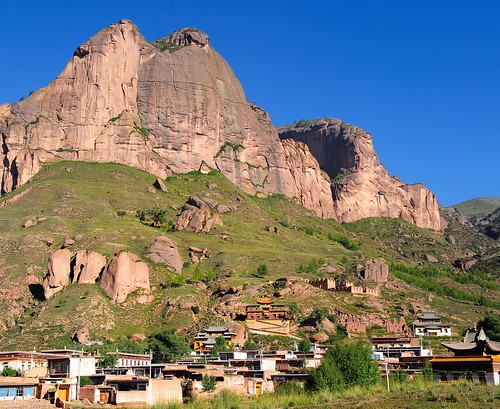
Mount Khyung-ngon (Blue Garuda) is a broad cliff behind Rabgya monastery to the north, to the south the river Ma chu རྨ་ཆུ་ ( Yellow River). There is a walk to the hilltop shrine (3570 m) and passes several smaller shrines and caves, giving a good view of the river.

Above: Rabgya monastery and the Mountain Khyung-ngon (Blue Garuda)

Rabgya Monastery (locally pronounced Rabja) is a small enclave on the north bank of the river Ma chu རྨ་ཆུ་ ( Yellow River) belonging to Machen rather than Kawasumdo county.Rabgya Monastery formally known as Tashi Kundeling, is an important branch of Sera monastery, founded on the advice of the Seventh Dalai Lama in 1769 by a Mongolian from Kokonor named Arik Geshe (1726-1803). Even today there are sevaral monks from the Sogwo Mongolian prefecture just to the east. The complex has been substantially rebuilt during the last 13 years, and reconstruction continues even now.

Other Views

All pictures on this post are shown with kind permission from Jan Reurink. His extensive photography may be seen by following this link to his copyright work:

Rabgya monastery and the Mountain Khyung-ngon (Blue Garuda)

Like to see the pictures as Large as your screen? Than why not click on the Slideshow : www.flickr.com/photos/reurinkjan/sets/72157622436074363/s…


Garuda in Mahayana Sutras

08 Tuesday Nov 2011

Posted by Mantrik in Garuda in Buddhism

≈ Leave a comment

GARUDAS IN SUTRAS


There are many references to the Garudas within the Buddhist Sutras. Most notably the Lotus Sutra and the Avatamsaka Sutra both refer to Kings of Garudas:


The Lotus Sutra

The Lotus Sutra in the beginning of the sutra speaks of the Four Garuda Kings, which represent the highest qualities of the ‘Wings of Speech’ which are dedicated to the Dharma’:

A. The Garuda King Greatness of Majestic Virtues representing all that which is temporary and provisional)
1. The Garuda King Greatness of Body representing emptiness
2. The Garuda King Greatness of Fulfillment representing the mean
3. The Garuda King As One Wishes, carrying the ‘Wish-Fulfilling’ (Cintamani) Gem around its throat, the magic gem that grants any wish to the one that possesses it. It represents the total blending of the three truths in a single thought.


Avatamsaka Sutra (Flower Ornament Sutra)


Volume 3, Section 3 (trans. Cleary)


Furthermore, the Garuda King Power of Great Swiftness had
found the door of Liberation of the non attached, unobstructed
eye observing everything in the worlds of sentient beings. The Garuda King unbreakable Jewel Topknot found the door of Liberation abiding in the realm of reality and teaching sentient beings. The Garuda King Pure Speed found the door of Liberation of the power of energy to perfect all means of transcendence. The Garuda King Non-Regressing Mind found the door of Liberation of bold power entering the realm of enlightenment. The Garuda King Steady Pure Light found the door of Liberation fully developing knowledge of the boundless differences in sentient beings. The Garuda King Beautifully Adorned Crown Topknot found the door of liberation adorning the citadel of the Buddha Teaching. The Garuda King Immediate Manifestation Everywhere found the door of Liberation perfecting the power of unbreakable equanimity. The Garuda King Ocean Surveyor found the door of Liberation knowing the physical forms of all sentient beings and manifesting forms for them. The Garuda King Dragon Sound Great Eye Energy found the door of Liberation of the knowledge entering into the acts of all sentient beings in death and life.

At that time the Garuda King Power of Great Swiftness, receiving the power of the Buddha, looked over all the Garudas and said in verse,

The Buddha Eye is vast and boundless,
Seeing all the lands in the ten directions.
Sentient beings therein are innumerable:
Showing great spiritual powers, he conquers them all.

The Buddhas Spiritual Powers are unhindered;
He sits under all the enlightenment trees in the ten directions
And expounds the truth like a cloud filling everywhere:
Jewel Topknot, hearing this, does not oppose.

The Buddha did various practices in the past,
Universally purifying great means of transcendence,
Giving offerings to all the enlightened:
This, the Swift King deeply believes.

In each pore of the Buddha
Boundless practices are shown in an instant;
Such is the realm of Buddhahood:
Adorned by Non Regression clearly sees all.

The Buddhas boundless wisdom light
Can destroy the net of ignorance and delusion
Saving all beings in all worlds:
This is the teaching held by Stable Light.

The citadel of truth is immense, endless;
Its gates are various and uncountable–
The Buddha, in the world, opens them wide:
Here, Beautiful Crown Topknot clearly enters.

All the Buddhas are one reality body–
True Suchness, equal, without distinctions;
The Buddha always abides through this power:
Immediate Manifestation Everywhere can fully expound this.

The Buddha in the past saved beings in all realms,
Shining Light throughout the world,
Teaching and taming by various means:
This supreme teaching Ocean Surveyor Realizes.

The Buddha sees all lands
All resting on the ocean of doing,
And rains the rain of truth on them all:
Dragon Sounds liberation is like this.

Karura (Garuda)

01 Tuesday Nov 2011

Posted by Mantrik in Garuda in Buddhism, Garuda in Hinduism, Garuda in Other Religions, Garuda Removing Obstructions, Uncategorized

≈ Leave a comment

Karura - Japanese spelling
Karura 迦楼羅, Karura-Ō 迦楼羅王 (Skt. = Garuda)
Bird of Life, Celestial Eagle, Half Bird Half ManORIGIN = HINDU MYTHOLOGY
Member of the TENBU. One of EIGHT LEGIONS Guarding Buddhism.
One of 28 LEGIONS Guarding the 1000-ARMED KANNON BODHISATTVA.
One of KANNON’S 33 BASIC MANIFESTATIONS.

Karura - at Sanjusangendo in Kyoto, Kamakura Period Karura - NOH Mask -- courtesty http://nohmask21.com/eu/karura.html Karura - NOH Mask -- courtesty http://nohmask21.com/karurasp.html
(L) Karura at Sanjūsangendō 三十三間堂 in Kyoto (see full image below)
(M) Modern NOH Mask. Found on J-web. (R) Modern NOH Mask. Found on J-web.
See Learn More section below for links to these J-web estores.

Karura 迦楼羅

Karura - at Sanjusangendo in Kyoto, Kamakura Period, Wood; photo courtesy of Handbook by Ishii Ayako
Karura, Sanjūsangendō 三十三間堂 (Kyoto)
Kamakura Era, Wood, Photo this J-book

spacerSanskrit = Garuḍa (the Devourer), Chinese = Jiālóuluó
Japanese = Karura, Korean = 가루라, Tibet = Khyung
A mythical bird-man creature of Hindu lore who was later adopted into the Buddhist pantheon as a protector deity. The gold-colored Garuda (Skt.) has a human body but the wings, face, and beak of an eagle-like bird. In early Hindu literature, Garuda is granted immortality by Lord Vishnu and serves as Vishnu’s mount (avatar). In Tibetan tradition, Garuda is a mythical bird, similar to an eagle, but of gigantic proportions, able to block the sunlight with its size. In Japan, Garuda is an enormous fire-breathing eagle-man with golden feathers and magic gems crowning its head. Garuda’s various attributes are:

  • Personifies the blazing rays of sun, the wind, and the esoteric teachings of the Vedas (Indian texts of sacred knowledge).
  • Fierce bird of prey, variously described as an eagle, hawk, or kite. Can spew fire from mouth; flapping of wings sounds like clap of thunder.
  • Mortal Enemy of the naga, a Hindu group including serpents & dragons. Karura feeds on the naga.
  • Only naga who possess a Buddhist talisman, or naga who have converted to Buddhism, can escape from the naga-eating Karura. <Source: Flammarion>
  • Karura’s hatred of the naga stems from an ancient feud between Karura’s mother (Skt. Vinata) and her sister (the mother of the naga).
  • First to teach mankind how to cure snake poison.
  • In Vedic and Hindu mythology, Karura steals the nectar of immortality from Indra in order to gain the release of his enslaved mother. The pot of nectar is eventually returned to Indra, on condition that Indra grant Karura permission to feed on naga.
  • In the Purana (religious texts of ancient Hindu myths), Karura accidentally drops the bile of a slain Ashura; the bile falls to earth where it solidifies into veins of emerald. This story sparked the belief that touching emeralds neutralizes any poison.
  • In Southeast Asia the walls of temples are often decorated with Karura, as at Angkor and Java
  • Carries the sacred Nyoi Hōju 如意宝珠 (Chn. = Rúyì 如意) jewel on its neck. This pearl is said to grant every wish and remove every suffering. According to legend, this jewel emerged from the head of the dragon king 竜王. <Sources: JAANUS and Digital Dictionary of Chinese Buddhism>
  • Garuda is sometimes translated into English as griffin. <Source: Digital Dictionary of Chinese Buddhism; sign in with user name “guest”>
  • In Japanese art, Karura is depicted as an ornate bird with human head; sometimes shown treading on serpents or holding serpents. Karura does not appear often in Japanese Buddhist sculpture, and is rarely the object of central devotion.
  • In Japanese art, Karura is one of the 33 Manifestations of Kannon Bodhisattva. See photo below.
  • Like the Phoenix, Garuḍa is associated with fire and serves as a symbol of flame (said to represent the purification of the mind by the burning away of all material desires). In Japan, the term Karura-en 迦楼羅焔 refers to the flames spewed from Karura’s mouth, while the term Karura Enkō 迦楼羅焔光 refers to the feiry halo (kaen kōhai 火焔光背) often attached to statues of Fudō Myō-ō. Some say Fudō’s customary flame halo originated from the vomit of Karura, while others say the halo resembles Karura’s outstretched wings. Karura’s head is sometimes depicted on Fudō’s halo as well. <Source: JAANUS>
  • There is a great deal of confusion about Karura and the mythical Phoenix. Many web sites refer to the Karura as Phoenix, and vice versa, but this is wrong. The two are different mythical creatures.
  • Garuda is the national symbol of both Thailand and Indonesia. The national airline of Indonesian, moreover, is named Garuda Indonesia.

Top of Page

Karura, Wood, Hase Dera, Kamakura, 15th Century
Karura. Painted Wood. One of Kannon’s 33 Forms
Hase Dera (Hase Kannon Temple) in Kamakura
From a set of 33 presented to Hase Dera
by Shogun Yoshimasa (1449-1471 AD)

The 25th chapter of the Lotus Sutra (Hokke-kyō 法華経) is popularly known as the Kannon Sutra (Jp. Kannonkyō 觀音経). It lists thirty-three forms that Kannon assumes when aiding sentient beings, including that of a Karura, dragon, monk, nun, official, child, general, king, & Buddha.
Karura, Hollow Dry Lacquer, Kofukuji Temple, Nara
Karura, Kōfukuji Temple, Nara
Hollow dry lacquer (dakkatsu kanshitsu 脱活乾漆)
H = 149 cm, Nara Period, National Treasure


Head of Garuda with body of Lion
The Eight-Legged Lion – Son of Union between Garuda and Lion.
One of the Three Symbols of Victory in the Fight against Disharmony.
From Buddhist Symbols in Tibetan Culture, by Loden Sherap Dagyab Rinpoche
Wisdom Publications, ISBN 0-86171-047-9. Click here to buy book at Amazon

Top of Page

Karura image by Ida Made Tlaga of Sanur (Bali); dated around 1880.
Image made by Ida Made Tlaga in Sanur (Bali) around 1880.
The original is kept at the library of Leiden University. Photo courtesy of Wikipedia

Top of Page

BELOW FROM THIS J-SITE
Karura is the name of a legendary bird
Karura flys in the four heavens over Mt. Shumisen
Eating dragons
Its wings shine with a golden color
Magical gems are at its head
Blazes from its mouth
Over 1,200 km. in size
迦楼羅(かるら)は伝説上の鳥の名前。
須弥山(しゅみせん)の四天を翔り(かけり)
龍を獲って食とする
翼は金色(こんじき)
頭に如意珠(にょいじゅ)
常に口から火炎を吐く
その大きさ三百余里

Karura - Phoenix God, Protector of the South Quandrant
Photo courtesy of www.mediawars.ne.jp

Top of Page

Engraving of Karyoubinga on Octogonal Pedestal, Chusonji Temple
Karura is sometimes associated / confused with Karyōbinga.
Karyōbinga Engraving on Octogonal Pedestal, Chūsonji Temple 中尊寺, 12th Century
(Length) 193.9 cm  (Height) 52.5cm., Photo courtesy 日本の美をめぐる, No. 35

Karyōbinga (Skt. = Kalavinka) 迦陵頻伽
Celestial beings who play music, dance, and fly through the air. They appear in many forms,
often with bird’s body and angelic head, and are sometimes associated with Amida Nyorai.
They appear often in Buddhist paintings, ritual robes, murals, and temple decorations.

Top of Page

LEARN MORE

  • Handbook on Viewing Buddhist Statues 仏像の見方, ハンドブック. Japanese language only; 192 pages; 80 or so color photos. Author Ishii Ayako 石井 亜矢子.
  • JAANUS. Japanese Architecture & Art Net Users System. Compiled by the late Dr. Mary Neighbour Parent; covers both Buddhist and Shinto deities in great detail and contains over 8,000 entries.
  • A Dictionary of Chinese Buddhist Terms. With Sanskrit & English Equivalents. Plus Sanskrit-Pali Index. By William Edward Soothill & Lewis Hodous. Hardcover, 530 pages. Published by Munshirm Manoharlal. Reprinted March 31, 2005. ISBN 8121511453.
  • Digital Dictionary of Chinese Buddhism (C. Muller; login “guest”)
  • Buddhism: Flammarion Iconographic Guides, by Louis Frederic, Printed in France, ISBN 2-08013-558-9, First published 1995.
  • Dictionary of Hindu Lore and Legend. By Anna L. Dallapiccola, Publisher Thames & Hudson, 2002. According to the dicitionary: “Garuda’s other names include: Amritaharana (stealer of the nectar), Gaganeshvara (lord of the sky), Nagantaka (destroyer of serpents), Shalmalin (taloned), Suparna (having beautiful wings), and Vainateya (sone of Vinata).” See page 83.
  • Numerous temple brochures and exhibition catalogs (Japanese and English). See list of resources on our Bibliography page. 
  • Karura NOH Masks – Online Stores
    • Karura – Modern Japanese NOH Mask #1
    • Karura – Modern Japanese NOH Mask #2
    • Modern NOH Masks of Various Japanese Deities
    • Modern GIGAKU Masks from Japan
Karura, Modern Gigaku Masks
Japanese GIGAKU Masks of Karura
At the Tokyo National Museum
Gigaku 伎楽 = Masked theatrical performances.In Japan, Karura 迦楼羅 also refers to a gigakumen 伎楽面 (gigaku mask) representing the mythical bird and used in a gigaku bird dance that was performed during the 8th to 12th century.
Karura, Gyodo mask, Heian Era 12th Century, Houryuu-ji Temple
Karura, Gyōdōmen 行道面 Mask, Heian Era
12th Century, Hōryūji Temple 法隆寺, Nara
Gyōdōmen = Parade masks to teach the
commoner about gaining good karma

Top of Page

spacer
bottom bar
I am indebted to Mark Schumacher for his kind permission to use the content of this post .Copyright 1995-2009. Mark Schumacher. Email Mark.
All stories and photos, unless specified otherwise, by Schumacher.
www.onmarkproductions.com     |     make a donation

Copyright Mark Schumacher :
http://www.onmarkproductions.com/html/karura.shtml

Garuda in Thailand – Paya Krut Mantra

30 Sunday Oct 2011

Posted by Mantrik in Garuda Amulets, Garuda in Buddhism, Garuda Removing Obstructions

≈ Leave a comment

The Thai name for Garuda is Paya Krut (sometimes seen as Krut Garuda).

Making offerings and chanting the mantra is believed to bring wordly success and wealth as well as spiritual protection.  I’ve shown a typical amulet pendant – there are more in the Garuda Images category.

The mantra is:

Karubija Gidti Mandtang Ma

A U Om Payaa Krut Ruj Ruj Laew Ruay


Na Dai Ngern Na Dai Tong Na Dai Sap

Na Mettaa Na Jaroen


Na Man Kong Na Laang Aathan Atitaami

GARUDA AS KARURA

29 Saturday Oct 2011

Posted by Mantrik in Garuda in Buddhism, Garuda in Hinduism, Garuda in Other Religions

≈ 3 Comments

Karura

From Wikipedia, the free encyclopedia

A statue depicting a wingless Karura, from Kofukuji Temple, Nara, Japan, 8th century CE.

The Karura (迦楼羅) is an enormous, fire-breathing creature from Japanese Hindu-Buddhist mythology. It has the body of a human and the face or beak of an eagle. It is based on the original Hindu mythical divinity Garuda;[1] and brought to Japan via Buddhism. Karura is a Japanese transliteration of the Sanskrit Garuḍa गरुड or the Pāli Garuḷa.

The Karura is said to be the enemy of snakes and dragons, just as Garuda is the enemy of the Nāgas. Only a dragon who possesses a Buddhist talisman, or one who has converted to the Buddhist teaching, can escape from the Karura.

The Karura is often mistaken for the Hōō (鳳凰), or Phoenix.

See also

  • Avalerion
  • Garuda
  • List of avian humanoids
  • Millennium mamodos
  • Tengu
  • Utawarerumono

References

  1. ^ Hindu Gods and Goddesses in Japan By Saroj Kumar Chaudhuri p.151
Retrieved from “http://en.wikipedia.org/w/index.php?title=Karura&oldid=457296149“
Categories:

  • Japanese legendary creatures
  • Mythological birds of prey
  • Japanese mythology stubs
  • This page was last modified on 25 October 2011 at 10:39.
  • Text is available under the Creative Commons Attribution-ShareAlike License; additional terms may apply. See Terms of use for details.
    Wikipedia® is a registered trademark of the Wikimedia Foundation, Inc., a non-profit organization.

Garuda – Emblem of Thailand (wiki)

29 Saturday Oct 2011

Posted by Mantrik in Garuda Images, Garuda in Buddhism, Garuda in Hinduism

≈ Leave a comment

Emblem of Thailand

From Wikipedia, the free encyclopedia
Emblem of Thailand
ตราแผ่นดินของไทย
(พระราชลัญจกรพระครุฑพ่าห์)
Thai Garuda emblem.svg
Versions
Tra Krut.svg
Another version with wider wings (usually mounted in front of a firm bearing royal warrant)
Details
Armiger King of Thailand
Adopted Originally adopted in Ayutthaya period. It was replaced by coat of arms of Siam until 1893.
Earlier versions see text
Use On all official documents and letters issued by Government of Thailand (e.g. Thai Government Gazette (ราชกิจจานุเบกษา), Constitutions of Thailand etc.).

The National Emblem (National Symbol) of Thailand features the Garuda, a figure from both Buddhist and Hindu mythology. In Thailand, this figure is used as a symbol of the royal family and authority. This version of the figure is referred to as Krut Pha, meaning “garuḍa acting as the vehicle (of Vishnu).” The National Emblem is also the Emblem of the King of Thailand.

The Garuda also features in the National Emblem of Indonesia and the city of Ulan Bator (the capital of Mongolia). The coat of arms of Indonesia is different from that of Thailand in one respect, because Emblem of Thailand does not feature a heraldic shield.

Contents

  • 1 History
  • 2 Gallery
  • 3 Coat of arms of Siam 1873-1910
  • 4 Emblem of the House of Chakri
  • 5 References
  • 6 See also
  • 7 External links

History

In 1873, King Chulalongkorn designed a coat of arms for use in Siam (the old name for Thailand), in the western heraldic style. Forty years later, he decided that the coat of arms was too westernized and lacked any image of the Garuda (which the kings of the Ayutthaya Kingdom had used as symbol of their power).

He then ordered his brother Prince Naris to make a new emblem in place of the coat of arms. At first, Naris had designed an emblem featuring Garuda, Naga and Vishnu inside a circle. The emblem was only used for a short while before the king suggested Naris removed the images of Vishnu and Naga.

After Chulalongkorn’s reign, King Vajiravudh ordered Phra Dhevabhinimit (Thai: พระเทวาภินิมมิต (ฉาย เทียมศิลปชัย)) to create a new emblem. The new one featured Chulalongkorn’s emblem, but encircled it to create an outer rim, which contained the royal ceremonial name. Upon coronation of a new king, the royal emblem is changed to correspond with the name of the new king. After the abdication of King Prajadhipok in 1935, King Ananda Mahidol succeeded to the throne, but he was never crowned, so a new emblem was not created and Chulalongkorn’s emblem was used instead.

Today, an image of Garuda without the circle around it is used as the emblem of Thailand. It is printed at the top of official documents and letters. Garuda sculptures are given by king as a royal warrant to any reliable and lawful companies who made trade contract with royal household and request so.

Gallery

  • Seal of Siam, which featured Garuda, Naga and Lord Vishnu. It was used as a royal seal before Rama V’s reign.

  • Seal of Siam. Drawn by Prince Naris to replace the coat of arms. It was only used for a short period.

  • Current version of Seal of Thailand. This version is used as the center part of the Thai royal seal, which is made by adding king’s ceremonial name around it.

  • Garuda sculpture, which is given by king of Thailand as a royal warrant.

  • Emblem of Thailand as appeared in front of Royal Thai Embassy in Prague, Czech Republic.

Coat of arms of Siam 1873-1910

Royal coat of arms of Siam
พระราชลัญจกรประจำแผ่นดินสยาม
Coat of Arms of Siam (1873-1910).svg
Versions
Coat of Arms of Siam on state document.jpg
Version as appeared on state document
Details
Armiger Chulalongkorn the Great
Adopted 1873-1910
Crest Great Crown of Victory and the Emblem of the Chakri Dynasty
Escutcheon Airavata , White Elephant and two Krises
Supporters Gajasiha and Rajasiha
Compartment Golden Royal seat
Motto สพฺเพสํ สงฺฆภูตานํ สามคฺคี วุฑฺฒิ สาธิกา
Orders The Order of the Nine Gems and the Order of Chula Chom Klao
Other elements The Royal Regalia of Thailand
Use On all official documents and letters issued by Government of Siam in the Fifth reign.

From 1873 to 1910 Thailand (then known as Siam) had a heraldic style coat of arms as a national emblem. The coat of arms was created during the reign of King Chulalongkorn (Rama V), who ordered his cousin His Highness Prince Pravij Jumsai to draw up a European style coat of arms in 1873.

The Coat of Arms of the Kingdom of Siam (พระราชลัญจกรประจำแผ่นดินสยาม), follows and contains almost all components and elements of the European heraldic tradition. The escutcheon or Shield, is divided into three quadrants. The first (chief) quadrant depicts a mythological three-headed white elephant, or Erawan (เอราวัณ) (in Hindu mythology called Airavata) the vehicle of the god Indra, the creature is set on a yellow field. This quadrant represents the Kingdom of Siam and the Thai heartland, the three heads of the elephant represents the northern, central and southern Siam. The lower left quadrant (dexter base) depicts a white elephant in front of a red field. This quadrant represents the Laotian suzerainty (the symbol comes for its native name “Lan Xang“, land of the million elephants.). The lower lower right quadrant (sinister base) depicts two crossed krises (one with and one without a scabbard) on a pink field, this represents the Malay suzerainty to the south.

Above the shield is the symbol representing the Chakri Dynasty, a disc and a trident (chakra and trisula). The shield is then surrounded by the chain of the Ancient and Auspicious Order of the Nine Gems (representing Buddhism) with a chain and pendant from the Most Illustrious Order of Chula Chom Klao (featuring a portrait of King Chulalongkorn).

The arms contains all of the six Royal Regalia of Thailand. Firstly the shield is crowned by the Great Crown of Victory, with a rays of light emitting from the ‘Phra Maha Wichian Mani’; a diamond set atop the crown. Besides the shield are two seven-tiered Royal Umbrellas. Crossed behind the shield is the Sword of Victory to the left and the Royal Staff to the right. In front of the them are the Royal Fan and Flywhisk (to the right and left, respectively). And finally on the compartment, a golden multi-layered base with a blue top, are the Royal Slippers, a pair of golden ‘Indian’ slippers.

The motto is written in gold on a red and green ribbon at the bottom of the arms. The motto, which is written in the Pali language in Thai script reads: “สพฺเพสํ สงฺฆภูตานํ สามคฺคี วุฑฺฒิ สาธิกา” (Romanization: “Sabbesam Sanghabhutānam Sāmaggī Vuḍḍhi Sādhiga.”), translated as:”Unity brings happiness”. The supporters of the arms are two mythical creatures, clad in regalia. To the left of the shield (dexter) is an elephant lion (a lion with a trunk) or a ‘Gajasiha‘ (คชสีห์). To the right of the shield (sinister) is a king of the lions the ‘Rajasiha‘ (ราชสีห์). The two supporters represents the two ancient departments of Kalahom (Gajasiha) and Mahatthai (Rajasiha).

The Kalahom ministry is the department of the Military and the south, while the Mahatthai ministry is department of the civil service and the north, both vital in the administration of the Kingdom. Finally the mantle of the arms is the cloak of the Order of Chula Chom Klao, tied with pink ribbons (pink being the colour of Tuesday, the day of Chulalongkorn’s birth).

Coat of arms of Siam as a cap-badge of the Royal Thai Police.

When Vajiravudh succeeded his father as King Rama VI in 1910, he decided to replace the coat of arms with the current emblem. This was because the arms were too Westernized (at the time the King was trying to bolster Siamese Nationalism). Together with the fact that Siam by 1910 has lost the entirety of Laos to the French Empire (1893 and 1904) and the northern Malay States to the British Empire (1909).

Today the Coat of arms is still used as the cap-badge of the Royal Thai Police and is the official symbol of the Chulachomklao Royal Military Academy.

Emblem of the House of Chakri

Emblem of the Chakri Dynasty, depicting the Chakra and Trisula.

The House of Chakri founded in 1782 by King Buddha Yodfa Chulaloke (or King Rama I) became the Royal House of Siam, and then later Thailand. King Rama I himself choose both name and the emblem for the dynasty. The Chakra which provides both name and the pictoral representation to the House of Chakri, is composed of the discus (Chakra) and the trident (Trisula), the celestial weapons of the Gods Narayana and Shiva respectively. The Siamese King is seen as a personification of the former. The coined name Chakri thus denotes the transcending force of divine strength and stability upon the physical realm.

References

  • สมบัติ พลายน้อย (in Thai). ความรู้เรื่องตราต่าง ๆ พระราชลัญจกร. รวมสาส์น.
  • สำนักเลขาธิการคณะรัฐมนตรี (1996) (in Thai). พระราชลัญจกร.
  • ธงทอง จันทรางศุ. “การพระราชทานตราตั้งห้าง” (in Thai).

See also

  • Royal Warrant of Appointment (Thailand)
  • Flag of Thailand
  • Royal Standard of Thailand
  • List of Thai Flags
  • Monarchy of Thailand
  • Chakri Dynasty
  • Seals of The Provinces of Thailand

External links

  • Current National Emblem of Thailand
  • Coat of arms of Siam 1873-1910
  • Royal crest of the Kingdom of Siam


Retrieved from “http://en.wikipedia.org/w/index.php?title=Emblem_of_Thailand&oldid=457759373“
Categories:

  • National emblems
  • National symbols of Thailand
  • This page was last modified on 28 October 2011 at 02:44.
  • Text is available under the Creative Commons Attribution-ShareAlike License; additional terms may apply. See Terms of use for details.
    Wikipedia® is a registered trademark of the Wikimedia Foundation, Inc., a non-profit organization.

Garuda Mudras

28 Friday Oct 2011

Posted by Mantrik in Garuda Images, Garuda in Buddhism, Garuda in Hinduism, Garuda Removing Obstructions

≈ Leave a comment

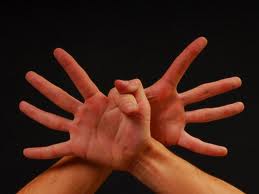
Hindu/Yoga Garuda Mudra

In terms of Deity interaction, the mudra works with the mantra to invoke the qualities and protection of Garuda.

In terms of Yoga , the Garuda Mudra activates the blood flow and the circulation. It also helps alleviate exhaustion.

  Clasp your thumbs and place your hands, the right on top of the left with the palms facing inwards, on your lower abdomen. Remain in this position for about ten breaths.

  Later slide your hands to the navel. Remain there for another ten breaths.

  Then place your hands on the pit of the stomach and remain for another ten breaths.

  After this, place your left hand on the sternum, turn your hands in the direction of your shoulders and spread your fingers.

Source: http://health.indianetzone.com/yoga/1/garuda_mudra_suchi_mudra.htm

Some sources have the hands the opposite way round, as shown here:


Buddhist Garuda Mudra

Pictorial Guide: http://vajrayogini.com/mudras/mudra018.html


This mudra is used to purify offerings and beings, and to protect against obstructions such as those form illness and spirits.  One example is its use prior to Kusali Tsog.

← Older posts
Newer posts →

Recent Posts

  • Journey to the West Research
  • Shamanic Phurba / Kila
  • Introduction to the Phurba / Kila
  • RED DZAO SHAMANISM
  • A Female Shaman’s Coat, with Garuda connections

Recent Comments

yogimicyahoocom's avataryogimicyahoocom on ANIMALS AND DEITIES
Mantrik's avatarMantrik Garudika on A Female Shaman’s Coat,…
Mantrik's avatarMantrik Garudika on Phurba, Kila and Vajrakil…
rikudousennin's avatarrikudousennin on Phurba, Kila and Vajrakil…
rikudousennin's avatarrikudousennin on A Female Shaman’s Coat,…

Archives

  • May 2018
  • July 2017
  • August 2016
  • June 2015
  • November 2014
  • October 2014
  • May 2014
  • November 2013
  • October 2013
  • July 2013
  • May 2013
  • February 2013
  • December 2012
  • November 2012
  • October 2012
  • September 2012
  • August 2012
  • May 2012
  • April 2012
  • March 2012
  • February 2012
  • January 2012
  • December 2011
  • November 2011
  • October 2011

Categories

  • Garuda Amulets
  • Garuda Images
  • Garuda in Buddhism
  • Garuda in Dzogchen
  • Garuda in Hinduism
  • Garuda in Other Religions
  • Garuda LInks
  • Garuda Purana Wisdom
  • Garuda Removing Obstructions
  • Ritual & Implements
  • Shamanism
  • Uncategorized

Meta

  • Create account
  • Log in
  • Entries feed
  • Comments feed
  • WordPress.com

Recent Posts

  • Journey to the West Research
  • Shamanic Phurba / Kila
  • Introduction to the Phurba / Kila
  • RED DZAO SHAMANISM
  • A Female Shaman’s Coat, with Garuda connections

Recent Comments

yogimicyahoocom's avataryogimicyahoocom on ANIMALS AND DEITIES
Mantrik's avatarMantrik Garudika on A Female Shaman’s Coat,…
Mantrik's avatarMantrik Garudika on Phurba, Kila and Vajrakil…
rikudousennin's avatarrikudousennin on Phurba, Kila and Vajrakil…
rikudousennin's avatarrikudousennin on A Female Shaman’s Coat,…

Archives

  • May 2018
  • July 2017
  • August 2016
  • June 2015
  • November 2014
  • October 2014
  • May 2014
  • November 2013
  • October 2013
  • July 2013
  • May 2013
  • February 2013
  • December 2012
  • November 2012
  • October 2012
  • September 2012
  • August 2012
  • May 2012
  • April 2012
  • March 2012
  • February 2012
  • January 2012
  • December 2011
  • November 2011
  • October 2011

Categories

  • Garuda Amulets
  • Garuda Images
  • Garuda in Buddhism
  • Garuda in Dzogchen
  • Garuda in Hinduism
  • Garuda in Other Religions
  • Garuda LInks
  • Garuda Purana Wisdom
  • Garuda Removing Obstructions
  • Ritual & Implements
  • Shamanism
  • Uncategorized

Meta

  • Create account
  • Log in
  • Entries feed
  • Comments feed
  • WordPress.com

Blog at WordPress.com.

Privacy & Cookies: This site uses cookies. By continuing to use this website, you agree to their use.
To find out more, including how to control cookies, see here: Cookie Policy
  • Subscribe Subscribed
    • Khyung Garuda ཁྲོཾ
    • Already have a WordPress.com account? Log in now.
    • Khyung Garuda ཁྲོཾ
    • Subscribe Subscribed
    • Sign up
    • Log in
    • Report this content
    • View site in Reader
    • Manage subscriptions
    • Collapse this bar
 

Loading Comments...