• Garuda Dandakam
  • Garuda Purana – wisdom teachings
  • Garuda Resources
  • Garuda Rituals

Khyung Garuda ཁྲོཾ

~ Garudapedia – for all things Garuda

Khyung Garuda ཁྲོཾ

Category Archives: Garuda in Hinduism

GARUDA AS KARURA

29 Saturday Oct 2011

Posted by Mantrik in Garuda in Buddhism, Garuda in Hinduism, Garuda in Other Religions

≈ 3 Comments

Karura

From Wikipedia, the free encyclopedia

A statue depicting a wingless Karura, from Kofukuji Temple, Nara, Japan, 8th century CE.

The Karura (迦楼羅) is an enormous, fire-breathing creature from Japanese Hindu-Buddhist mythology. It has the body of a human and the face or beak of an eagle. It is based on the original Hindu mythical divinity Garuda;[1] and brought to Japan via Buddhism. Karura is a Japanese transliteration of the Sanskrit Garuḍa गरुड or the Pāli Garuḷa.

The Karura is said to be the enemy of snakes and dragons, just as Garuda is the enemy of the Nāgas. Only a dragon who possesses a Buddhist talisman, or one who has converted to the Buddhist teaching, can escape from the Karura.

The Karura is often mistaken for the Hōō (鳳凰), or Phoenix.

See also

  • Avalerion
  • Garuda
  • List of avian humanoids
  • Millennium mamodos
  • Tengu
  • Utawarerumono

References

  1. ^ Hindu Gods and Goddesses in Japan By Saroj Kumar Chaudhuri p.151
Retrieved from “http://en.wikipedia.org/w/index.php?title=Karura&oldid=457296149“
Categories:

  • Japanese legendary creatures
  • Mythological birds of prey
  • Japanese mythology stubs
  • This page was last modified on 25 October 2011 at 10:39.
  • Text is available under the Creative Commons Attribution-ShareAlike License; additional terms may apply. See Terms of use for details.
    Wikipedia® is a registered trademark of the Wikimedia Foundation, Inc., a non-profit organization.

Garuda – Emblem of Thailand (wiki)

29 Saturday Oct 2011

Posted by Mantrik in Garuda Images, Garuda in Buddhism, Garuda in Hinduism

≈ Leave a comment

Emblem of Thailand

From Wikipedia, the free encyclopedia
Emblem of Thailand
ตราแผ่นดินของไทย
(พระราชลัญจกรพระครุฑพ่าห์)
Thai Garuda emblem.svg
Versions
Tra Krut.svg
Another version with wider wings (usually mounted in front of a firm bearing royal warrant)
Details
Armiger King of Thailand
Adopted Originally adopted in Ayutthaya period. It was replaced by coat of arms of Siam until 1893.
Earlier versions see text
Use On all official documents and letters issued by Government of Thailand (e.g. Thai Government Gazette (ราชกิจจานุเบกษา), Constitutions of Thailand etc.).

The National Emblem (National Symbol) of Thailand features the Garuda, a figure from both Buddhist and Hindu mythology. In Thailand, this figure is used as a symbol of the royal family and authority. This version of the figure is referred to as Krut Pha, meaning “garuḍa acting as the vehicle (of Vishnu).” The National Emblem is also the Emblem of the King of Thailand.

The Garuda also features in the National Emblem of Indonesia and the city of Ulan Bator (the capital of Mongolia). The coat of arms of Indonesia is different from that of Thailand in one respect, because Emblem of Thailand does not feature a heraldic shield.

Contents

  • 1 History
  • 2 Gallery
  • 3 Coat of arms of Siam 1873-1910
  • 4 Emblem of the House of Chakri
  • 5 References
  • 6 See also
  • 7 External links

History

In 1873, King Chulalongkorn designed a coat of arms for use in Siam (the old name for Thailand), in the western heraldic style. Forty years later, he decided that the coat of arms was too westernized and lacked any image of the Garuda (which the kings of the Ayutthaya Kingdom had used as symbol of their power).

He then ordered his brother Prince Naris to make a new emblem in place of the coat of arms. At first, Naris had designed an emblem featuring Garuda, Naga and Vishnu inside a circle. The emblem was only used for a short while before the king suggested Naris removed the images of Vishnu and Naga.

After Chulalongkorn’s reign, King Vajiravudh ordered Phra Dhevabhinimit (Thai: พระเทวาภินิมมิต (ฉาย เทียมศิลปชัย)) to create a new emblem. The new one featured Chulalongkorn’s emblem, but encircled it to create an outer rim, which contained the royal ceremonial name. Upon coronation of a new king, the royal emblem is changed to correspond with the name of the new king. After the abdication of King Prajadhipok in 1935, King Ananda Mahidol succeeded to the throne, but he was never crowned, so a new emblem was not created and Chulalongkorn’s emblem was used instead.

Today, an image of Garuda without the circle around it is used as the emblem of Thailand. It is printed at the top of official documents and letters. Garuda sculptures are given by king as a royal warrant to any reliable and lawful companies who made trade contract with royal household and request so.

Gallery

  • Seal of Siam, which featured Garuda, Naga and Lord Vishnu. It was used as a royal seal before Rama V’s reign.

  • Seal of Siam. Drawn by Prince Naris to replace the coat of arms. It was only used for a short period.

  • Current version of Seal of Thailand. This version is used as the center part of the Thai royal seal, which is made by adding king’s ceremonial name around it.

  • Garuda sculpture, which is given by king of Thailand as a royal warrant.

  • Emblem of Thailand as appeared in front of Royal Thai Embassy in Prague, Czech Republic.

Coat of arms of Siam 1873-1910

Royal coat of arms of Siam
พระราชลัญจกรประจำแผ่นดินสยาม
Coat of Arms of Siam (1873-1910).svg
Versions
Coat of Arms of Siam on state document.jpg
Version as appeared on state document
Details
Armiger Chulalongkorn the Great
Adopted 1873-1910
Crest Great Crown of Victory and the Emblem of the Chakri Dynasty
Escutcheon Airavata , White Elephant and two Krises
Supporters Gajasiha and Rajasiha
Compartment Golden Royal seat
Motto สพฺเพสํ สงฺฆภูตานํ สามคฺคี วุฑฺฒิ สาธิกา
Orders The Order of the Nine Gems and the Order of Chula Chom Klao
Other elements The Royal Regalia of Thailand
Use On all official documents and letters issued by Government of Siam in the Fifth reign.

From 1873 to 1910 Thailand (then known as Siam) had a heraldic style coat of arms as a national emblem. The coat of arms was created during the reign of King Chulalongkorn (Rama V), who ordered his cousin His Highness Prince Pravij Jumsai to draw up a European style coat of arms in 1873.

The Coat of Arms of the Kingdom of Siam (พระราชลัญจกรประจำแผ่นดินสยาม), follows and contains almost all components and elements of the European heraldic tradition. The escutcheon or Shield, is divided into three quadrants. The first (chief) quadrant depicts a mythological three-headed white elephant, or Erawan (เอราวัณ) (in Hindu mythology called Airavata) the vehicle of the god Indra, the creature is set on a yellow field. This quadrant represents the Kingdom of Siam and the Thai heartland, the three heads of the elephant represents the northern, central and southern Siam. The lower left quadrant (dexter base) depicts a white elephant in front of a red field. This quadrant represents the Laotian suzerainty (the symbol comes for its native name “Lan Xang“, land of the million elephants.). The lower lower right quadrant (sinister base) depicts two crossed krises (one with and one without a scabbard) on a pink field, this represents the Malay suzerainty to the south.

Above the shield is the symbol representing the Chakri Dynasty, a disc and a trident (chakra and trisula). The shield is then surrounded by the chain of the Ancient and Auspicious Order of the Nine Gems (representing Buddhism) with a chain and pendant from the Most Illustrious Order of Chula Chom Klao (featuring a portrait of King Chulalongkorn).

The arms contains all of the six Royal Regalia of Thailand. Firstly the shield is crowned by the Great Crown of Victory, with a rays of light emitting from the ‘Phra Maha Wichian Mani’; a diamond set atop the crown. Besides the shield are two seven-tiered Royal Umbrellas. Crossed behind the shield is the Sword of Victory to the left and the Royal Staff to the right. In front of the them are the Royal Fan and Flywhisk (to the right and left, respectively). And finally on the compartment, a golden multi-layered base with a blue top, are the Royal Slippers, a pair of golden ‘Indian’ slippers.

The motto is written in gold on a red and green ribbon at the bottom of the arms. The motto, which is written in the Pali language in Thai script reads: “สพฺเพสํ สงฺฆภูตานํ สามคฺคี วุฑฺฒิ สาธิกา” (Romanization: “Sabbesam Sanghabhutānam Sāmaggī Vuḍḍhi Sādhiga.”), translated as:”Unity brings happiness”. The supporters of the arms are two mythical creatures, clad in regalia. To the left of the shield (dexter) is an elephant lion (a lion with a trunk) or a ‘Gajasiha‘ (คชสีห์). To the right of the shield (sinister) is a king of the lions the ‘Rajasiha‘ (ราชสีห์). The two supporters represents the two ancient departments of Kalahom (Gajasiha) and Mahatthai (Rajasiha).

The Kalahom ministry is the department of the Military and the south, while the Mahatthai ministry is department of the civil service and the north, both vital in the administration of the Kingdom. Finally the mantle of the arms is the cloak of the Order of Chula Chom Klao, tied with pink ribbons (pink being the colour of Tuesday, the day of Chulalongkorn’s birth).

Coat of arms of Siam as a cap-badge of the Royal Thai Police.

When Vajiravudh succeeded his father as King Rama VI in 1910, he decided to replace the coat of arms with the current emblem. This was because the arms were too Westernized (at the time the King was trying to bolster Siamese Nationalism). Together with the fact that Siam by 1910 has lost the entirety of Laos to the French Empire (1893 and 1904) and the northern Malay States to the British Empire (1909).

Today the Coat of arms is still used as the cap-badge of the Royal Thai Police and is the official symbol of the Chulachomklao Royal Military Academy.

Emblem of the House of Chakri

Emblem of the Chakri Dynasty, depicting the Chakra and Trisula.

The House of Chakri founded in 1782 by King Buddha Yodfa Chulaloke (or King Rama I) became the Royal House of Siam, and then later Thailand. King Rama I himself choose both name and the emblem for the dynasty. The Chakra which provides both name and the pictoral representation to the House of Chakri, is composed of the discus (Chakra) and the trident (Trisula), the celestial weapons of the Gods Narayana and Shiva respectively. The Siamese King is seen as a personification of the former. The coined name Chakri thus denotes the transcending force of divine strength and stability upon the physical realm.

References

  • สมบัติ พลายน้อย (in Thai). ความรู้เรื่องตราต่าง ๆ พระราชลัญจกร. รวมสาส์น.
  • สำนักเลขาธิการคณะรัฐมนตรี (1996) (in Thai). พระราชลัญจกร.
  • ธงทอง จันทรางศุ. “การพระราชทานตราตั้งห้าง” (in Thai).

See also

  • Royal Warrant of Appointment (Thailand)
  • Flag of Thailand
  • Royal Standard of Thailand
  • List of Thai Flags
  • Monarchy of Thailand
  • Chakri Dynasty
  • Seals of The Provinces of Thailand

External links

  • Current National Emblem of Thailand
  • Coat of arms of Siam 1873-1910
  • Royal crest of the Kingdom of Siam


Retrieved from “http://en.wikipedia.org/w/index.php?title=Emblem_of_Thailand&oldid=457759373“
Categories:

  • National emblems
  • National symbols of Thailand
  • This page was last modified on 28 October 2011 at 02:44.
  • Text is available under the Creative Commons Attribution-ShareAlike License; additional terms may apply. See Terms of use for details.
    Wikipedia® is a registered trademark of the Wikimedia Foundation, Inc., a non-profit organization.

Traditional Hindu Invocation of Garuda

29 Saturday Oct 2011

Posted by Mantrik in Garuda in Hinduism, Garuda Removing Obstructions

≈ Leave a comment

Garuda
 

vyAdhUta-kesara-saTA-vikarALavaktram
hastAgravisphurita-sha~NkhagadAsi-chakram |
AviShkR^itaM sapadi yena nR^isiMharUpam
nArAyaNaM tamapi vishvasR^ijaM namAmi ||

The mantras of garuDa, the vAhana of shrImannArAyaNa, are well known in the tantras. Though the upAsanA of gAruDa mantra is associated popularly with cure for snake bite or sarpabhaya nivR^itti, the mantra is used to procure various other benefits as well. gaRuDa is worshipped with different mantras in different forms such as mahAgaruDa, AshugaruDa, sarpAshana garuDa, prachaNDa garuDa, mAyA garuDa, sammohana garuDa, jvAlAmAlin, kUTagAruDa etc.

Some of the fruits ascribed to garuDopAsanA are:

dR^iShTaprayogabahuLaM dR^iShTAdR^iShTArthasAdhakam |
AkaraM sarvasiddhInAM divyaM paramagAruDam ||
AyurArogyavijayadhanadhAnyasamR^iddhidam |
putradaM vAkpradaM nR^INAM sarvasaubhAgyavardhanam ||
rAjavashyaM lokavashyaM shtrIpuMvashyaM tathaiva cha |
sarvarakShAkaraM puMsAM sarvashatrunibarhaNam ||
yuddhe tu vijayaM rAjA prApnuyAdyuddhadurmadaH |
sarvavyAdhiprashamanaM sarvama~Ngalama~Ngalam ||
saptakShudrakaraM mantraM saptakShudraharaM tathA |
kR^ityAshUnyakaraM chaiva kR^ityAshUnyaharaM tathA ||
shAntikaM paushTikaM chaiva aShTaishvaryakaraM param |
bahunA.tra kimuktena chaturvargaphalapradam ||

The primary application of the mantra is in the removal of different kinds of poison such as sthAvara, ja~Ngama, kR^itrima, sahaja, sha~NkA and hAlAhala. The upAsanA of the various garuDa mantras also bless the upAsaka with miraculous powers, mastery over snakes, health, wealth, success, prosperity, progeny, speech, victory in wars, freedom from enemies etc. The use of garuDa mantra in vashya, AkarShaNa, stambhana, mohana, ucChATana, mAraNa and unmAdana [kShudrasaptaka] are also described in the shAstras. The mantra is used for both abhichAra and pratyabhiChara. Similarly, gAruDa kR^ityA is of great might and can be used for offence or defense.

For laukika and AbhichArika prayogas, garuDa is visualized independently, with his shakti [lakShmIH, kIrtiH, jayA, mAyA] or attendants [suparNa, tArkShya, vainateya, bhIma], sporting various weapons. However, for protection or sAtvikopAsanA, garuDa is always visualized carrying shrImannArAyaNa. gAruDa mantras are classified into four types: bIja, piNDa, saMj~nA and pada and their use is based on the purpose of upAsanA. Pada mantra described in dakShiNAmUrti samhitA as also the pa~nchAkSharI mantra are popular among shrIvidyA upAsakas. In shrIkrama tantra, amR^ita garuDa is an a~Nga of dhanvantari, who in turn is the a~Nga of vAsudeva represented by the 12 syllabled mantra. The stuti mantra, which is technically a mAlA mantra, is used to offer puShpA~njali to garuDa.

The garuDa maNDala involves the worship of nine gAruDa mUrtis with their respective mantras. mahAgaruDa is stationed at the center of the maNDala surrounded by the eight mUrtis in the eight cardinal directions. mahAgaruDa is described as suvarNAbha [of golden complexion] below the knees, himaprabha [of white complexion] from waist below, ku~NkumAruNa [red like the rising sun] from neck and below and clear like the quartz above the neck. His left and right feet respectively exhibit the ku~nchita and svastika postures. His feet touch the pAtALa and head extends beyond the brahma loka. His nose is long, blue in color and terrifying whereas the ears are charming and decorated with mANikya kuNDalas. His face, shining with three eyes, is fierce due to the protruding sharp teeth. His eyes are tawny reddish in color [kapila varNa] and he is adorned with the best of ornaments. His hands are long and shoulders are gigantic. The nine great serpents form his ornaments. He wears ananta and guLika as bracelets in his two hands, vAsuki as the yaj~nasUtra, takShaka as the waist band, kArkoTaka as the necklace, padma and mahApadma as ear ornaments and sha~Nkha as the headgear. He is seated on a lotus and sports wings that extend infinitely in either direction. He shines with eight hands in which he holds sha~Nkha, chakra, sudhAkumbha, nAga, muShTi, gadA and khaDga. Two of his hands are engaged on serving the lotus feet of shrImannArAyaNa seated on his back, along with bhagavatI ramA. The garuDa pa~nchAkSharI kalpa from kAshyapa samhitA and garuDa kalpa of AkAshabhairava tantra deal extensively with the upAsanA of pakShirAja.

Aku~nchya sarvamaparaM pravisArya pAdam
tirya~NmukhaM chaTulachakravivR^ittasha~Nkham |
anyonyaghaTTitakaraM lalashabdayukta-
muDDIyamAnamanishaM smara duHkhashAntyai ||


Source: http://www.kamakotimandali.com/misc/garuda.html

Garuda Purana (Wikipedia)

28 Friday Oct 2011

Posted by Mantrik in Garuda in Hinduism

≈ Leave a comment

Garuda Purana

From Wikipedia, the free encyclopedia
Part of a series on
Hindu scriptures
Om
Vedas
Rigveda · Samaveda
Yajurveda · Atharvaveda

Divisions
Samhita · Brahmana
Aranyaka · Upanishad
Vedangas
Shiksha · Chandas
Vyakarana · Nirukta
Kalpa · Jyotisha
Upanishads
Rig vedic
Aitareya

Yajur vedic
Brihadaranyaka · Isha
Taittiriya · Katha
Shvetashvatara
Sama vedic
Chandogya · Kena
Atharva vedic
Mundaka · Mandukya
Prashna
Puranas
Brahma puranas
Brahma · Brahmānda
Brahmavaivarta
Markandeya · Bhavishya

Vaishnava puranas
Vishnu · Bhagavata
Naradeya · Garuda · Padma · Agni
Shaiva puranas
Shiva · Linga
Skanda · Vayu
Itihasa
Ramayana

Mahabharata (Bhagavad Gita)

Other scriptures
Manu Smriti
Artha Shastra · Agama
Tantra · Sūtra · Stotra
Dharmashastra
Divya Prabandha
Tevaram
Ramcharitmanas
Yoga Vasistha
Scripture classification
Śruti · Smriti
Timeline
Hindu texts

Garuda Purana (Devanagari: गरुड़ पुराण) is one of the Puranas which are part of the Hindu body of texts known as smriti. It is a Vaishnava Purana and its first part contains a dialog between Vishnu and Garuda, the King of Birds. The second half contains details of life after death, funeral rites and the metaphysics of reincarnation, thus it is recited as a part Antyesti (Antim Sanskar) or funeral rites (funeral liturgy) in Hinduism.[1]

Contents

  • 1 Overview
  • 2 Suta and the other sages
  • 3 List of Punishments
  • 4 Further reading
  • 5 References
  • 6 External links

Overview

Bhagawaan* = from the Sanskrit language: The Supreme, possessed of all material and spiritual opulences, in a proportion beyond limited human imagination or infinite as in the Sanskrit word, Ananta.

Garuda Purana is in the form of instructions by Vishnu to his carrier, Garuda (The King of Birds – a vahana of Bhagawaan* Vishnu). This Purana deals with astronomy, medicine, grammar, and gemstone structure and qualities. In addition, the Garuda Purana is considered the authoritative Vedic reference volume describing the Nine Pearls, which includes not only the well known Oyster Pearl, but also the Conch Pearl, Cobra Pearl, Boar Pearl, Elephant Pearl, Bamboo Pearl, Whale Pearl, Fish Pearl, and Cloud Pearl.

The Garuda Purana is a Vaishnava Purana. The others in this group are Vishnu Purana, Narada Purana, Bhagavata Purana, Padma Purana and Varaha Purana.

The Garuda Purana has nineteen thousand shlokas (lines). It is a medium-sized Purana. The Skanda Purana, for example, has eighty-one thousand shlokas. And the Markandeya Purana only nine thousand. The thousand shlokas of the Garuda Purana are divided into two parts, a purva khanda (first part) and an uttara khanda (subsequent part). Each khanda has several chapters (adhyaya). The purva khanda is much longer, it has two hundred and thirty-four chapters. The Uttara khanda has only forty-five.

The latter half of this Purana deals with life after death. The followers of the eternal Vedas, addressed as “Hindus” of India generally read this Purana while cremating the physically dead bodies of departed atmaas/souls. This has given great importance to the origin of Garuda. There are nineteen thousand verses describing the ways to the Lord.

Suta and the other sages

Suta was a very learned sage. He was very well-versed in the Puranas and in the shastras (sacred texts). He was also devoted to Vishnu.

Vedavyasa taught the Puranas to one of his disciples named Romaharshana or Lomaharshana. He was thus named because the hair (roma) on his body was thrilled (harshana) when he heard the Puranas from his teacher. It was Romaharshana who related the stories of the Puranas to everyone else. The Bhagavata Purana says the Romaharshana had a son named Suta and it was this son who related the story of that particular Purana to the other sages . On the other hand, Romaharshana himself belonged to the suta class, so that he too could be addressed as Suta. From reading the Garuda Purana, one does get the impression that it is Romaharshana himself who is relating the story, and not his son.

To come back to the point, Romaharshana came to a forest known as Naimisharanya. He sat there and contemplated the mysteries of the Lord Vishnu.

Several other rishis (sages) led by Shounaka also came to the forest. They told Romaharshana, “Sage, you know everything. Who is the god of all gods? Who is to be worshipped? What does one meditate on? Who destroys evil? How did the world come to be created? What is dharma (righteousness)? Tell us all these things and more”.

“I will”, replied Romaharshana. “I will recite to you the Garuda Purana. Many years ago, this Purana was told to the sage Kashyapa by the great bird Garuda himself. I learnt it from my teacher Vyasadeva. But first let me list for you the twenty-two avataras of Vishnu.

The first incarnation was a young boy. In this form, Vishnu adopted celibacy (brahmacharya) and performed difficult tapasya (meditation).

The second incarnation was as a boar (varaha). In this form, Vishnu rescued the earth from the underworld.

The third incarnation was as a great sage (devarishi). In this form, Vishnu spread the knowledge of several texts (tantras).

The fourth incarnation was as two sages named Nara-Narayana.

The fifth incarnation was as the great sage Kapila. Kapila taught his disciple Asuri the wonderful philosophy known as Samkhya yoga.

The sixth incarnation was as the sage Dattatreya, the son of Atri and Anasuya.

The seventh incarnation took place in the manvantra known as svayambhuva. Vishnu was born as the son of Ruchi and Akuti and performed many yajnas (sacrifices).

In the eighth incarnation, Vishnu was born as Urukrama, the son of Nabhi and Meru. He taught everyone the righteous way of life.

In the ninth incarnation, Vishnu became the king Prithu and restored foodgrains and herbs to the earth.

The tenth of Vishnu’s incarnations was as a fish (matsya). He saved Vaivasvata Manu from the flood that enveloped the world.

In the eleventh incarnation, Vishnu adopted the form of a turtle (kurma). This was to help out the gods (devas) and demons (asuras) in the churning of the ocean (samudra manthana).

The twelfth incarnation was as Dhanvantari, physician of the gods and the originator of medicine.

The thirteenth was Mohini avatara. In this form, Vishnu adopted the body of a beautiful woman to charm and rob the asuras of the amrita (a life-giving drink).

In the fourteenth incarnation, Vishnu became Narasimha, a being who was half-man and half-lion, to kil the evil asura Hiranyakashipu.

The fifteenth incarnation witnessed Vishnu’s adoption of the form of dwarf (Vamana). This was to hoodwink the asura King Bali and restore the heaven to gods.

In the sixteenth incarnation, Vishnu became Parashurama, killed all the wicked Kshatriyas in the world twenty-one times.

The seventeenth incarnation was as Vedavyasa, the son of Parashara and Satyavati. Vedavyasa divided and classified the Vedas.

Vishnu’s eighteen incarnation was as the sage Narada.

The nineteenth incarnation was Rama. This incarnation is thought to be a bit contradictory, (Parshuram was present in the swayamvar of Sita) but it is not. Parshuram was ardh-avatara(Half incarnation) & Rama was poorna manav Avatara (Full Incarnation as a Human Soul).

The twentieth incarnation was Balarama.

In the twenty-first incarnation, Vishnu was Krishna .

The twenty-second incarnation is yet to come. And Vishnu will come to destroy evil in the world and restore righteousness”.

There have been several other incarnations of Vishnu. But the ones mentioned above are the major ones.

List of Punishments

Garuda Purana Wrong doings Punishment given in Naraka Schema
Thamisra Stealing other’s property including wife, children and belongings Thrashing with the weapon, gada

Yama Kinkara using the Gada
Andhathamisra Post marital cheating between husband and wife Unconscious circulation in abyss
Rourava Destroying, spiliting other’s family and their belongings Spanking the Life organs with trident by Yama kinkaras

Yama kinkara with trident
Maharourava Brutally destroying other’s property and family for the sake of acquisition A wild animal, Guru, tortures them in various forms
Kumbipaka Destroying innocent lives for food Roasting in hot oil tank by yama kinkaras
Kalasuthira Torturing and putting elders & parents in starvation Same set of treatment in hell
Asipathira Abetting God and devolve from Dharma practises Torture by evil spirits; results in fear
Panrimukha Punishing innocent people and accomplice unlawful activiites Grinding under the sharp teeth of an animal resembling pig
Anthakoopa Torturing lives and inhumane activities Biting by wild animals; wild run over by animals
Agnikunda Snatching other’s property by force, gaining undue advantage and unlawfully making best out of everything in the world Roasting in agni kunda in inverted position with hands and legs ties under a stick
Vajrakandaka Unchaste people in physical contact with unmatching people Physical hugging with fire spitting idols
Kirumibhojana Selfish survival; eating other’s work Insects are left intruding the body
Sanmali Unchaste relationships by kamukas Thrashing with gada
Vaitharani Using official stature to attain undue advantge, acting against dharma Submerging in Vaitarna river where water is mixed with blood, urine and feces
Booyoga Shameless behaviour, mixing with unchaste women & leading the life without any motive Biting by poisonous insects and animals
Prayanyoga Torturing lives and killing them Spanking the Life organs with arrows by Yama kinkaras
Pasusava All devatas are in cows; torturing those cows Slashing by canes
Sarameyathana Gutting houses, torturing lives, poisoning lives, involving in massacre Torture by unknown wild animals
Aveesi Giving false evidence Submerging and torturing in livebodies
Paribathana Drinking and making others drink alcohol Drinking lava
Sharakarthama Involving in bad activities and defaming elders and living with selfish motives Torture the Life organs by unknown spirits
Rakshogana Performing narametha yaga, eating non vegetarian dishes and torturing soft animals The same victims torture the hecklers
Soolaproga Killing innocent people, masterminding people, committing suicide and doing nambike droha [i.e., betraying(droha) a person’s trust(nambike).] Unknown birds peck and torture with shoola
Susimuga Not doing any good, amassing wealth by wrong doings and stealing wealth Stinging with nails and torturing with hunger and thirst
Kunthasootha Not doing any good and always doing bad to others Stinging by insects like scorpio
Vadaroga Severrly torturing living beings Handcuffed and burnt in fire

Roasting in fire
Piravarthana Defaming guests and not treating them Torturing with hunger and thirst
Lalapakshuga Torturing wife and involving her in unchaste relationships Same set of treatment in hell

Further reading

  • Mani, Vettam. Puranic Encyclopedia. 1st English ed. Manipal: Motilal Banarsidass, 1975.
  • Govindarajan “Garuda Puranam”, 1st edition. New Horizon,2007

References

  1. ^ Introduction:The Garuda Purana, Translated by Ernest Wood and S.V. Subrahmanyam (1911).

External links

  • The Garuda Purana at sacred-texts.com (Wood and Subrahmanyam translation, 1911)
  • Roman diacritic transliteration, Bombay: Venkatesvara Steam Press, part 1
  • Roman diacritic transliteration, Bombay: Venkatesvara Steam Press, part 2
  • Roman diacritic transliteration, Bombay: Venkatesvara Steam Press, part 3
  • The Garuda Purana summary
  • The Garuda Purana excerpts English translation of important verses


Retrieved from “http://en.wikipedia.org/w/index.php?title=Garuda_Purana&oldid=456474572“
Categories:

  • Puranas
  • This page was last modified on 20 October 2011 at 06:13.
  • Text is available under the Creative Commons Attribution-ShareAlike License; additional terms may apply. See Terms of use for details.
    Wikipedia® is a registered trademark of the Wikimedia Foundation, Inc., a non-profit organization.

Garuda Mudras

28 Friday Oct 2011

Posted by Mantrik in Garuda Images, Garuda in Buddhism, Garuda in Hinduism, Garuda Removing Obstructions

≈ Leave a comment

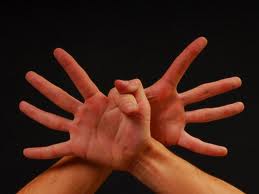
Hindu/Yoga Garuda Mudra

In terms of Deity interaction, the mudra works with the mantra to invoke the qualities and protection of Garuda.

In terms of Yoga , the Garuda Mudra activates the blood flow and the circulation. It also helps alleviate exhaustion.

  Clasp your thumbs and place your hands, the right on top of the left with the palms facing inwards, on your lower abdomen. Remain in this position for about ten breaths.

  Later slide your hands to the navel. Remain there for another ten breaths.

  Then place your hands on the pit of the stomach and remain for another ten breaths.

  After this, place your left hand on the sternum, turn your hands in the direction of your shoulders and spread your fingers.

Source: http://health.indianetzone.com/yoga/1/garuda_mudra_suchi_mudra.htm

Some sources have the hands the opposite way round, as shown here:


Buddhist Garuda Mudra

Pictorial Guide: http://vajrayogini.com/mudras/mudra018.html


This mudra is used to purify offerings and beings, and to protect against obstructions such as those form illness and spirits.  One example is its use prior to Kusali Tsog.

Useful Links

22 Saturday Oct 2011

Posted by Mantrik in Garuda in Buddhism, Garuda in Hinduism, Garuda in Other Religions, Garuda LInks

≈ Leave a comment

GENERAL INFORMATION

http://www.khandro.net/mysterious_garuda.htm

http://en.wikipedia.org/wiki/Garuda

http://www.rigpawiki.org/index.php?title=Garuda

http://www.mythicalcreaturesguide.com/page/Garuda

Robert Beer’s handbook of Tibetan Symbols: http://books.google.co.uk/books?id=-3804Ud9-4IC&pg=PA50&lpg=PA50&dq=robert+beer+garuda&source=bl&ots=FQBITTOcHy&sig=X-iwphcwMaL6qcDg7YBxV7wLImI&hl=en&ei=DgujTpK-HYzssga69tn9Ag&sa=X&oi=book_result&ct=result&resnum=1&ved=0CBwQ6AEwAA#v=onepage&q=garuda&f=false

Bird Headed Beings

http://www.crystalinks.com/bird.html

BUDDHIST TEXTS AND PRACTICES

The Fire Sword of Black Garuda (Highest Yoga Tantra Empowerment required):

Click to access flu_black_garuda.pdf

The Threefold Wrathful One (Vajrapani, Hayagriva, Garuda):

FPMT Booklet $1: http://shop.fpmt.org/Vajrapani-Hayagriva-Garuda-bkltlttr_p_1216.html

Garuda Multi-colored, Sadhana of Transcendental Wisdom

http://shop.fpmt.org/Garuda-Multi-colored-Sadhana-of-Transcendental-Wisdom-c5_p_1040.html

Avatamsaka Sutra

http://books.google.co.uk/books?id=JdEKGM18EtUC&pg=PA88&lpg=PA88&dq=avatamsaka+sutra+garuda&source=bl&ots=ozM5nrq-FZ&sig=M8s0rttOdNWocrDTKX6G6UQpScI&hl=en&ei=phGjTsrbMs_2sgbQveXrAg&sa=X&oi=book_result&ct=result&resnum=1&ved=0CCYQ6AEwAA#v=onepage&q&f=false

Dzogchen Texts

http://www.khandro.net/meditation_garuda.htm

HINDU TEXTS AND PRACTICES

Garuda Purana

http://en.wikipedia.org/wiki/Garuda_Purana (In the Hindu text the Garuda Purana, Shakyamuni is described as the 21st incarnation of Vishnu. )

Click to access GarudaPurana.pdf

Garuda/KirtiMukha Comparison

http://johnnyringo.wordpress.com/2011/09/29/garudakirtimukha-comparison/

Bhagavad Gita (10 verse 30)

http://www.google.co.uk/search?q=Bhagavad+GIta+garuda&ie=utf-8&oe=utf-8&aq=t&rls=org.mozilla:en-GB:official&client=firefox-a

“Among the Daitya demons I am the devoted Prahlada, among subduers I am time, among beasts I am the lion, and among birds I am Garuda.”

Introducing Garudas

21 Friday Oct 2011

Posted by Mantrik in Garuda in Buddhism, Garuda in Hinduism, Garuda in Other Religions

≈ Leave a comment

GARUDA

This site will become a resource for Spiritual Development with a focus on Garuda in Buddhism, Hinduism and related Shamanism. I have included a few images. Please let me know if you hold any rights over them.

GARUDA’S MANTRA:   OM PA KSHIM SVAHA  ॐ प क्षिम्‌ स्वाहा

INFORMATION ON GARUDA  from KHANDRO.NET:

Credit for info from Khandro.Net = Karma Sangey Khandro (H.B.Holt). “Garuda” Khandro.Net.

[30.5.2011]

The Indian mythological bird, Garuda, (Jap. Karura) is usually depicted as part human. It was created from the cosmic egg that also hatched the 8 elephants supporting the universe. Fully mature when hatched, it can easily traverse the universe from one end to the other. It can kill and eat poisonous snakes with no harmful consequences to itself.

The oldest collection of Indian hymns, the Rig Veda says:

They call him Indra, Mitra, Varuna, Agni

And he is heavenly nobly-winged Garutman.

To what is One, sages give many a title;

They call it Agni, Yama, Matarishvan . … .

In the image at Flight of the Garuda, a Song by Shabkar, whose Shangpa lineage emblem it is, we see him as the traditional mount or vehicle [vahana] of the Hindu god Vishnu and his consort Lakshmi [Abundance.] His kneeling form is often found in front of shrines and temples dedicated to Vishnu.

According to a south Indian legend, a sculptor who was an ardent devotee of Lord Vishnu carved a Garuda image out of wood while in Kanchipuram. When completed, having been carved correctly as decreed by the Shilpa Shastras, it came to life and took off towards the south.

At Parakkai village, the Garuda took a dip in the tank in front of the temple there exclaiming with delight. Then he rose again and hovered around the deity as if doing pradakshina (Tib. kora, devotional circling.)

An artisan working on a pillar at the temple saw the bird and for some reason, hurled his chisel at it hurting its right wing. The bird fell to earth crying, “Madhusudhana,” to the disbelief of the man. The 4-armed stone image of Vishnu was later carved and installed on that spot.

Cha Khyung (Bird-Garuda) was a mountain deity of Rebkong, Tibet, an area on the west side of the river in Amdo province. After he was subjugated by Padmasambhava he became a worldly protector.

In some cultures, the garuda acquired a human torso and became half human — a man-bird known as a kinnara or shang-shang. The shang-shang is associated with Buddha Amoghasiddhi (Unerring Accomplisher,)whose consort is Green Tara.

Amoghasiddhi is the Buddha of the northern direction and is representative of the skandha Samskara. He is depicted as green, with his hands in the abhaya — the “do not fear,” or protection, mudra. He is the conqueror of “thirst.” That is, working with visualizations and other Vajrayana methods that focus on him, we can transmute the yearning leading to attachment, which is often simplistically expressed as “desire” or “greed.” Another of his symbols is the vishvavajra or double vajra that stands for Foundation and also, for resolve and stability — here as concerns meditation and its objective (as in Shabkar’s Song 6 linked above.)

Garuda and the Kumbh Mela

The Hindu festival, the Kumbhmela, is held at a different spot on the shores of the Ganges every 12 years. At the beginning of 2001, Allahabad was the focus for this largest of the world’s gatherings. It is one of four spots where Garuda is believed to have rested during a battle with demons over the pot of divine nectar of immortality. Garuda’s flight lasted 12 divine days, or 12 years of mortal time, so the Kumbh Mela is celebrated at each city of 3 towns, alternating among them every three years.

Garuda and the Sacred Kusha Grass

The Hindu epic, Mahabharata, tells of the connection between Garuda and the sacred kusha grass [Poa cynosuroides] which was offered to the Buddha as a seat under the tree:

When Garuda brought some amrita from the moon for the Nagas as his mother’s ransom, Indra tried to prevent it. The amrita would make the nagas immortal, and they would pose a threat to Indra’s position as King of Heaven.

But faithful Garuda would not compromise his mother’s liberation. However, he arranged that after the nagas received it, it could then be stolen from them. In preparation for this, Garuda laid the nectar of immortality contained in its flask on the grass. That made it easy for Indra to steal which he did while the nagas were bathing in the stream.

When they emerged from the water, they expected the amrita to be on the kusha grass, itself. As they tried to lick up the divine substance, the spiky leaves of kusha slit their tongues. It is for this reason that the tongues of serpents are forked, and also that kusha [or kusa] is sacred — for having been in contact with amrita.

When Buddha Was a Suparna

Garuda is king of the class of beings known as suparnas. To demonstrate and share his profound understanding of the lure of a woman with a monk who was having difficulty with his vow of celibacy, the Buddha is said to have recounted his own experience as King of the “sunbirds,” who once ruled the Isle of Seruma, a land of nagas:

Once while on a gambling junket to Varanasi (formerly anglicized as Benares,) he had a love affair with his host’s extraordinarily beautiful chief wife, Sussondi. She had been informed of the garuda’s gorgeous appearance by palace attendants, and he was smitten as soon as she entered the gaming room. Under the cover of a dark and dangerously violent wind that the suparna had stirred up, they flew away to his island home. There, they made passionate love, but then he had the nerve to return to the host-king’s palace – without her.

Meanwhile, Sagga, the magical minstrel of the King of Benares, was sent to search for the missing Queen. On board ship, his song was so wonderful that a makara emerged from the ocean depths in excitement and smashed it to bits. He drifted on a plank that finally landed under a banyan on Seruma. Queen Sussondi, walking alone by the shore, recognized the nearly-drowned man and took him to her quarters to revive him. She had to hide him in case the garuda should recognize him, of course, and with Sagga living in secret there in her quarters, one thing led to another.

Six weeks went by until a ship from Benares landed to provision there, and Sagga made it successfully back to his home having fulfilled, at least to a certain extent, his royal mission.

Skillfully and with delicacy, he sang of his adventure and his longing to the King and his faithless guest, the suparna, who even joined in with his wonderful voice. On hearing Sagga’s story expressed so skillfully, the garuda understood its significance.

Though he was the most splendid of all creatures, he had not been able to keep Sussondi for himself alone. Now filled with regret, he flew away to fetch her and returned her to the King. In that lifetime, he never again visited Benares.

There, in Jeta’s Grove, Buddha then told The Four Noble Truths and all about the births revealing also, that the long-ago King of Benares had been his own student, Ananda.

Indonesia Airlines

Besides embodying stamina and determination, the garuda’s association with luxury and sensuality is probably a further reason why it was chosen as the emblem of Indonesia Airlines. Indonesia was once the ancient playground of Indian rajahs, and the Isle of Seruma may well have been somewhere in that extensive archipelago.

Myth of Garuda recounted by an Indonesian Airlines pilot.

Brother Chhepu

In Nepal, the “mask of protection” is the face of a garuda-child called Chhepu. Folklore tells of his origin. He was one among the three brothers, Garuda, Chhepu and Hitimanga. Their mother had requested her husband to help her produce a son

“. . . who would be the bravest, most truthful, and endowed with all superior marks. Her husband told her to wait for a certain period. She being too impatient to wait for a long period, looked in the nest to see whether he was born or not. She found Chhepu in a premature condition, only with his head formed.

It is also told that Chhepu disappeared from the world as he did not want to see the Kaliyuga, the great yuga, when evil would completely triumph over good and the world would be destroyed by Vishnu in his incarnation as Kalki, the destroyer.

Knowing his bravery, truthfulness and endowment with all superior marks, Manjushree wanted to see him and requested Chhepu to show his full form. Chhepu appeared slowly amidst the cloud. Manjushree, as a veteran artist, immediately drew his form with his foot secretly without the knowledge of Chhepu. When Manjushree had only finished drawing his head, Chhepu came to know Manjushree’s deception and immediately disappeared. Due to his bravery, truthfulness and superior marks, he was given the [pride of] place at the top of the main entrance of stupas [as a] protection from all the dangers. Nagas [snakes] are the food of Chhepu.” ~ Nepali site, no longer available.

Garuda as Shiva’s Guardian

In the Shaiva tradition of Hinduism, Garuda is a guardian of Lord Shiva. A tale is told how once, perched on Mount Kailash, Garuda noticed a tiny bird. He was struck by the contrast between the majesty of Kailash and Shiva’s palace, and the delicacy of ” . . . a beautiful creature, a little bird seated on the arch crowning the entrance to Shiva’s place. Garuda wondered aloud: “How marvelous is this creation! One who has created these lofty mountains has also made this tiny bird — and both seem equally wonderful.”

Just then Yama, the god of death appeared, riding his black buffalo. Garuda noticed that the gaze of the Master of Death briefly fell upon the bird, but then he continued on his way into the abode of Shiva.

Since a mere glance from Lord Yama presages death, Garuda’s heart was filled with pity for the tiny bird. He gently picked it up and flew off with it clutched carefully in his powerful talons. He took it far, far, away to a deep forest where he gently placed it on a rock beside a rushing brook. Then he returned to Kailash and assumed his customary position at Shiva’s gate.

When Yama emerged from his consultation with the Great God, he nodded to Garuda in

recognition. Garuda took this opportunity to ask Lord Death, “Just before you went inside, I saw you notice a little bird. You seemed to have a pensive expression on your face. May I know why?”

Yama answered, “When my eyes fell on the bird, I saw that soon it would find its death in the jaws of a great python. But there are no such serpents here, high on Kailash, and I was briefly puzzled.”

Again, Garuda marveled; this time at the inevitability of karma.

Hybrids

Hybrids, or what we might call monsters such as creatures like the makara, originated, according to Buddhist tradition, during the time right after the Buddha’s Awakening when all hatred vanished from the world. Then, animals that had been foe and prey mated with each other, and produced offspring such as these.

~ Loden Sherap Dagyab Rinpoche. Buddhist Symbols in Tibetan Culture. Wisdom Publ.,

Garuda in its form as part-human is certainly in this category. Garuda Bherunda is a double-headed form that may have led to the Austro-Hungarian and American forms called the Double Eagle (as in the title of J. P. Sousa’s famous march.)

Burmese birds and animals

The Two Kinnara

There was once a hunter who caught a pair of kinnara alive in the Himavanta forest. (As you know, the body of such creatures is human but the feet, wings and tail are those of a bird.) The hunter took them to the king, who asked why he had brought them. Were they offerings? Could they be roasted and eaten?

The hunter answered that kinnara have two interesting qualities: they have sublime voices, so if you can get them to sing they are able to do so more beautifully than people. The second interesting point is that kinnara dance wonderfully, much more beautifully than people.

The king commanded the kinnara to sing and dance, but even after being ordered two or three times, they just stood there looking at the king. The king, seeing that the kinnara would neither sing nor dance, then ordered his minister to have them roasted for dinner. Confronted by this dreadful situation, the female kinnara (called kinnari cf. canary) sat last spoke up:

That we do not dance is not because we can’t; that we do not sing is not because we are afraid of losing our voices. In fact, we would really like to sing and dance because we are sure that we do so more beautifully than any human being. The reason why we do not sing is because nearly all the songs known to man are just idle chatter. If we were to sing such songs, then we would not be following the tenet of Right Speech.

Because we are afraid of doing any evil is the reason why we do not sing for you. The reason why we do not dance is that such dancing will only cause Your Majesty to be sensually aroused which again is a source of evil.

That’s why we won’t sing or dance – it’s not that we are lazy or don’t want to show our skill or are too stupid to understand you. To sing and dance would be harmful to ourselves and harmful to Your Majesty, and we would both fall into hell as a result.

The king was pleased by what he heard. He said, “This is indeed an artful thing that has been said. Release the kinnari, but have the male which has remained silent roasted for tomorrow’s breakfast.”

The male kinnara said, “All grass-eating animals have the rain as their support. Farm labourers have beasts of burden as their support. As for my life, at this moment my life has Your Majesty as my support, as this kinnari has me as her support. If Your Majesty wishes to release this kinnari, do as you wish, but she will be without refuge. And I will be faulty in the performance of my duty to her as her refuge.

If you are going to release her alone, please slay me here and now so that the kinnari will have no doubt that I am unable to help her anymore.”

(These words were true, polite and said at the right time, with the right intention. Then again, what the kinnara had said also qualifies as artful speech.) Thus the king released the both of them, and had the hunter take them back to where they had been caught, together with a golden ornament fitting for a couple able to speak artful speech.

~ from a Mangala Sutra (wedding) teaching at Dhammakaya Institute of Belgium

Canary

Some etymological speculations: kinnari = canary, the warbling yellow bird; kinor is Biblical (and modern) Hebrew for the melodious ancient harp or lyre, the musical instrument whose shape provides the name for the freshwater lake at the north eastern tip of Israel, “Gennaseret” ie. the “Sea” of Galilee, source of the Jordan river. What is relevant here is the association with sweetness, either in the sound of its waves lapping the shore, the sweetness of its water or that of the fruit which grows by it.

The garuda is certainly related to the simurgh of Persian mythology. A related creature is the rukh or roc of The Arabian Nights’ Entertainment ( a.k.a. A 1000 Nights and a Night.) Both these mysterious creatures of a class known to mythologists as wundervogel, are distinctly but entirely birds.

There is a Garuda Valley, Kyunglung, to the south-west of Mount Kailash. Once the capital of the land called Zhang Zhung, it was the site of the Silver Palace (Khyunglung Ngulkhar,) the ruins of which are still there in the upper Sutlej Valley of India.

Tibetan: Khyung

Garuda, Black (Tibetan: khyung nag po)  isused to transmute the various poisons of worldly existence, specifically the harm caused by nagas.

Having the face of a bird, two eyes, a beak and two horns raising above with a slight curve, his orange eyebrows and hair flow upward like flame. The arms are outstretched to each side holding the head and tail of a long spotted snake while biting the mid-section with the beak. On the crown of the head is a golden jewel plundered from the Naga Realms. He is adorned with gold and jewel ornaments in the form of bracelets, armlets and two necklaces. Behind and beneath the arms green and brown feathered wings are unfurled. From the waist up he is blue-black in colour. The waist and lower body are well covered in yellow plumage with dark brown tail feathers showing between the legs. With two red talons each clutching a green snake he stands above a sun disc and pink lotus seat. In front of a four tiered white structure symbolic of mount Sumeru, the king of mountains, Black Garuda stands completely surrounded by red and orange flames of pristine awareness.

At the top left is a Gelugpa lama wearing monastic robes and a yellow pandita hat holding the right hand at the heart in a gesture of blessing and the left cradling a black begging bowl in the lap. At the right side is a lama wearing monastic robes and a yellow cap typical of the early Panchen lamas. Both are seated on cushions with backrests.

Historically, from classical Indian mythology, Garuda is the king of birds. In Tantric Buddhism, Garuda is yet another form in which various buddhas arise for the purpose of removing disease and injury caused by nagas and poisoning. Metaphorically the worst ‘poisons’ are desire, hatred and ignorance. Various forms of Garuda are found in both the Nyingma and Sarma traditions. The Chakrasamvara and Kalachakra Tantras of the Sarma tradition are the main sources for the various lineages of practice.

———————————————————————————————————

Credit for info from Khandro.Net = Karma Sangey Khandro (H.B.Holt). “Garuda” Khandro.Net.

[30.5.2011]

Copyright © 2005 Shelley and Donald Rubin Foundation.

Photographed Image Copyright © 2004 Rubin Museum of Art

Note: Offerings to Garuda

In addition to offerings traditionally made to a Buddhist Tantric Deity, there was formerly a ‘red offering’ of flesh and blood to Garuda.  In Tibet, in both Bon and Nyingma historically regarded Garuda in some aspects as a ‘bdud’ demonic force to be propitiated with such an offering. This practice has now been abandoned although it is not known if isolated practices continue.

Amoghasiddhi

In the same way as Garuda is seen as the guardian and mount of Shiva, in the Vajrayana he is seen to have the ame relationship with Amoghasiddhi.  The shang-shang half-man half-bird is seen as representing man in transition towards a new level of consciousness.  (Lama Govinda).

© Blue Garuda

Copyright is asserted for the use of the phrase ‘Blue Garuda’ and also when displayed as ‘Blue Garuda’ in any other form wherever copyright has legal force. This applies to any design, typographical style or capitalisation and any script/language. Moral rights and intellectual property rights are also asserted where they have legal force. In addition, this applies to any of the site content not otherwise protected.


Newer posts →

Recent Posts

  • Journey to the West Research
  • Shamanic Phurba / Kila
  • Introduction to the Phurba / Kila
  • RED DZAO SHAMANISM
  • A Female Shaman’s Coat, with Garuda connections

Recent Comments

yogimicyahoocom's avataryogimicyahoocom on ANIMALS AND DEITIES
Mantrik's avatarMantrik Garudika on A Female Shaman’s Coat,…
Mantrik's avatarMantrik Garudika on Phurba, Kila and Vajrakil…
rikudousennin's avatarrikudousennin on Phurba, Kila and Vajrakil…
rikudousennin's avatarrikudousennin on A Female Shaman’s Coat,…

Archives

  • May 2018
  • July 2017
  • August 2016
  • June 2015
  • November 2014
  • October 2014
  • May 2014
  • November 2013
  • October 2013
  • July 2013
  • May 2013
  • February 2013
  • December 2012
  • November 2012
  • October 2012
  • September 2012
  • August 2012
  • May 2012
  • April 2012
  • March 2012
  • February 2012
  • January 2012
  • December 2011
  • November 2011
  • October 2011

Categories

  • Garuda Amulets
  • Garuda Images
  • Garuda in Buddhism
  • Garuda in Dzogchen
  • Garuda in Hinduism
  • Garuda in Other Religions
  • Garuda LInks
  • Garuda Purana Wisdom
  • Garuda Removing Obstructions
  • Ritual & Implements
  • Shamanism
  • Uncategorized

Meta

  • Create account
  • Log in
  • Entries feed
  • Comments feed
  • WordPress.com

Recent Posts

  • Journey to the West Research
  • Shamanic Phurba / Kila
  • Introduction to the Phurba / Kila
  • RED DZAO SHAMANISM
  • A Female Shaman’s Coat, with Garuda connections

Recent Comments

yogimicyahoocom's avataryogimicyahoocom on ANIMALS AND DEITIES
Mantrik's avatarMantrik Garudika on A Female Shaman’s Coat,…
Mantrik's avatarMantrik Garudika on Phurba, Kila and Vajrakil…
rikudousennin's avatarrikudousennin on Phurba, Kila and Vajrakil…
rikudousennin's avatarrikudousennin on A Female Shaman’s Coat,…

Archives

  • May 2018
  • July 2017
  • August 2016
  • June 2015
  • November 2014
  • October 2014
  • May 2014
  • November 2013
  • October 2013
  • July 2013
  • May 2013
  • February 2013
  • December 2012
  • November 2012
  • October 2012
  • September 2012
  • August 2012
  • May 2012
  • April 2012
  • March 2012
  • February 2012
  • January 2012
  • December 2011
  • November 2011
  • October 2011

Categories

  • Garuda Amulets
  • Garuda Images
  • Garuda in Buddhism
  • Garuda in Dzogchen
  • Garuda in Hinduism
  • Garuda in Other Religions
  • Garuda LInks
  • Garuda Purana Wisdom
  • Garuda Removing Obstructions
  • Ritual & Implements
  • Shamanism
  • Uncategorized

Meta

  • Create account
  • Log in
  • Entries feed
  • Comments feed
  • WordPress.com

Blog at WordPress.com.

Privacy & Cookies: This site uses cookies. By continuing to use this website, you agree to their use.
To find out more, including how to control cookies, see here: Cookie Policy
  • Subscribe Subscribed
    • Khyung Garuda ཁྲོཾ
    • Already have a WordPress.com account? Log in now.
    • Khyung Garuda ཁྲོཾ
    • Subscribe Subscribed
    • Sign up
    • Log in
    • Report this content
    • View site in Reader
    • Manage subscriptions
    • Collapse this bar